Let's start here
Rebuildng pleasure after sexual trauma doesn't follow a timeline. It's not linear. Some days you'll feel ready; other days your body will say no, and that's information, not failure. A lemon vibrator, or any vibrator really, isn't a fix. It's a tool. The point is that you're back in control.
That matters more than anything else.
Why rebuilding pleasure feels different after trauma
When someone violates your consent, your body learns to protect itself. The nervous system goes on high alert. Arousal that once felt automatic now requires deliberate permission from your brain. Touch that felt pleasurable suddenly triggers dissociation or panic. This isn't broken. It's a survival response.
Reclaiming pleasure after trauma means slowly teaching your nervous system that sensation can be safe again. That you can want something and pursue it without shame or fear. That your body is yours, fully.
A lemon clitoral vibrator, like the ones Hello Nancy Shop offers, can help with this because suction stimulation works differently than vibration alone. Suction creates a rhythmic pressure that many people find grounding and present. It's less about friction and more about a consistent, gentle rhythm. For someone rebuilding trust in their own body, that predictability can feel safer.
Starting where you actually are
Honestly, the first step isn't picking up the toy. It's getting curious about what sensation feels safe right now, in this moment. That might be:
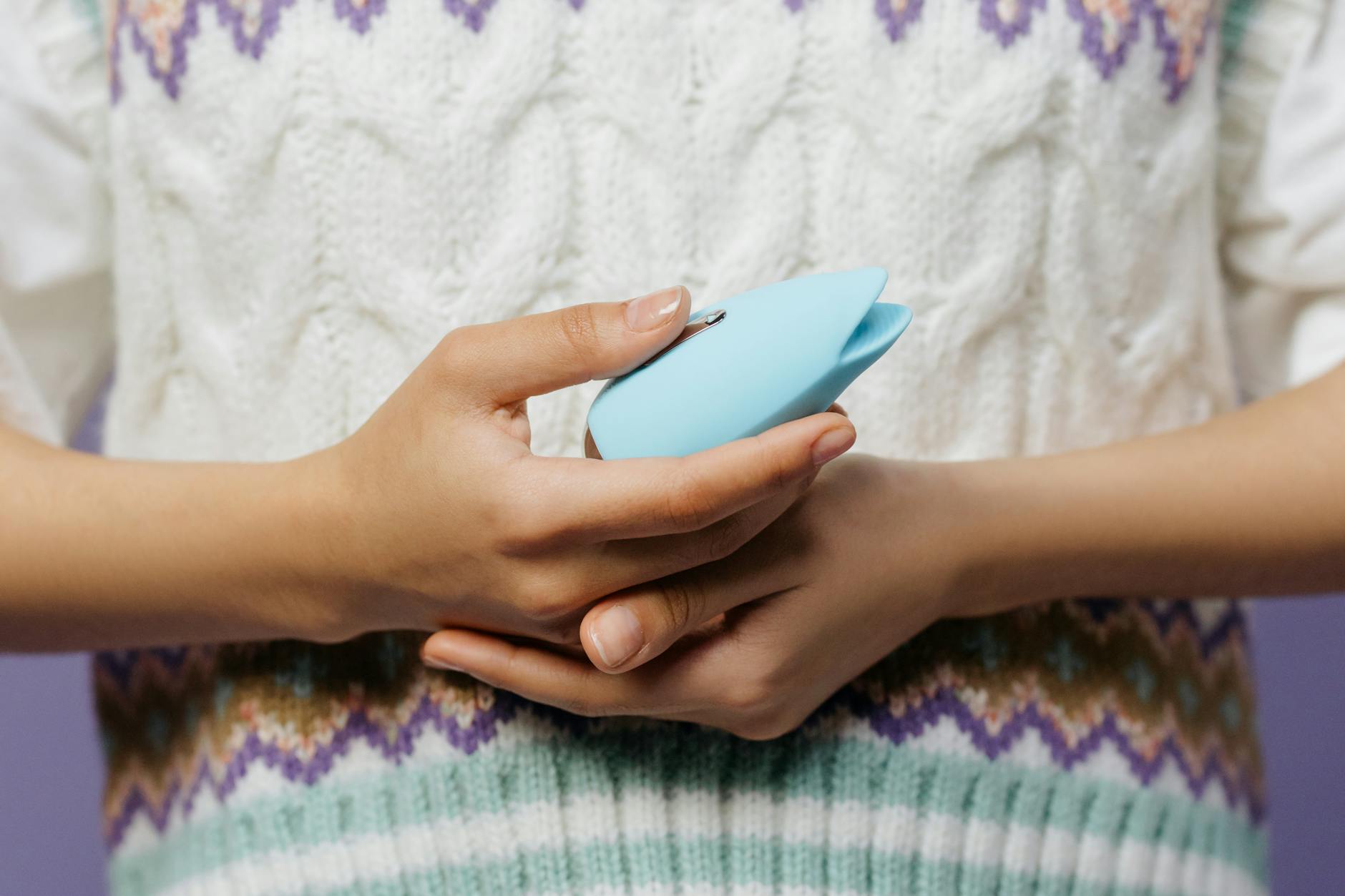
- Holding the lemon vibrator in your hand without turning it on, just noticing the weight and texture
- Looking at it in the mirror and naming what you see: color, shape, the fact that you chose it
- Touching it to your forearm or inner wrist to feel the material without any sexual expectation
This sounds slow. It is. And if your trauma happened recently, this might be as far as you go for months, and that's completely normal. Your nervous system sets the pace, not a blog post.
When you're ready to move forward, here's what I recommend.
Setting up for safety and control
Three things that shift the entire experience:
1. Time and privacy. This isn't about scheduling sex. This is about making sure you won't be interrupted, that you have at least 20-30 minutes where you're not listening for a partner's key in the door or your phone buzzing. Interruption, even minor, can yank you back into hypervigilance. Full control over your time and space is part of rebuilding trust.
2. The lube. Water-based lubricant is non-negotiable. Not because your body is broken, but because lube removes friction entirely. After trauma, any unexpected sensation can feel violating. Lube means the suction works smoothly, predictably. It's one fewer variable your nervous system has to process. Many people find this alone changes everything.
3. Naming what you want beforehand. Before you turn anything on, decide: Do I want to focus on sensation, or on pleasure? Do I want to try for orgasm, or just see what feels okay today? Both answers are valid. The point is that you're deciding, not discovering mid-experience and finding yourself panicked. This is your practice in consent with yourself.
How to actually use a lemon clitoral vibrator after trauma
The lemon's suction design is valuable here because you're not managing variables. Start with the toy off, held against your inner thigh or lower abdomen. Feel the weight. Breathe. If that's good, move it closer to your vulva, still off. Notice what happens in your body. Tingling? Numbness? Dissociation? All of that's normal.
When you're ready, turn it on the lowest setting. The suction will feel gentle, rhythmic, contained. Unlike vibration that pulses through your whole body, suction feels more localized. Many trauma survivors find this less overwhelming. You can feel it, but it's not happening to you. It's happening because you chose it, and you can stop whenever you want.
Here's what's important: if you feel even the smallest flutter of panic, stop. That's not failure. That's your nervous system telling you something. Listen to it. Rest. Come back another day, or do something else entirely.
If the sensation feels okay, the next variable is movement. You don't have to move. You can stay still. But if you want to shift your position slightly or press the toy a different way, do that. This is where you practice agency. Small actions that you initiate and control.
The role of your brain in rebuilding
Orgasm isn't the goal right now. Presence is. Many people who've experienced trauma find that their brain disconnects during stimulation as a protective mechanism. You might go numb or find your thoughts drift elsewhere entirely. That's dissociation, and it's your system's way of saying not yet.
If you notice that happening, pause. Come back to your senses: What do you hear? What's one thing you can feel besides the toy? What's something you can see right now? This is grounding. It brings your brain and body back into the same room.
Some people find that focusing on breath helps. In for four, hold for two, out for six. Others prefer to pay attention to texture: the toy's silicone, the sheet beneath you, the warmth of your own skin. There's no right way. Your way is the right way.
Why a lemon vibrator specifically
Lemon clitoral vibrators and the lemon sucker design offer something distinct from wand vibrators or standard vibrators. The suction mimics the sensation of oral sex in a way that feels more grounding for many people rebuilding trust in their body. It's rhythmic without being jarring. It's stimulating without being aggressive.
For someone who needs to feel in control, that matters. You're choosing the intensity. You're choosing how long. You're choosing whether to continue or stop.
When to bring a partner in
If you're partnered, this solo work comes first. Full stop. Your relationship to your own pleasure has to exist independently before you bring someone else into it. That takes however long it takes.
When and if you decide to involve your partner, start by telling them what you've learned about yourself. "I'm rebuilding my relationship with pleasure. I want to use the lemon vibrator, and I need you to trust that I'll tell you if I want to stop." Communication is the foundation. If your partner isn't willing to be patient and present with that, that's worth examining.
If you do want to explore together, let your partner hold the toy while you direct them. "A little higher." "Slower." "Stop." This keeps agency with you. The partner becomes an extension of your desire, not the director of it.
Grief shows up too
Honestly, sometimes when you start reconnecting with your body, you feel grief. Anger at what was taken from you. Sadness that sensation doesn't come easy anymore. That's not a sign you're doing this wrong. That's a sign you're actually feeling. That grief is part of reclaiming your body as yours. It's okay. Let it happen. It usually passes.
How long does this take
There's no timeline. Some people feel safe with sensation within weeks. Others take months or years. Both are normal. Your nervous system will let you know when it's ready to expand. Your job is to listen and not push.
If you're working with a trauma-informed therapist, tell them you're exploring this. If you find yourself stuck in panic or dissociation regularly, talk to someone trained in trauma recovery. A lemon vibrator is a tool for pleasure recovery, not a replacement for clinical support.
Your pleasure matters. You matter. And you get to define what reclaiming feels like, on your timeline, in your body.