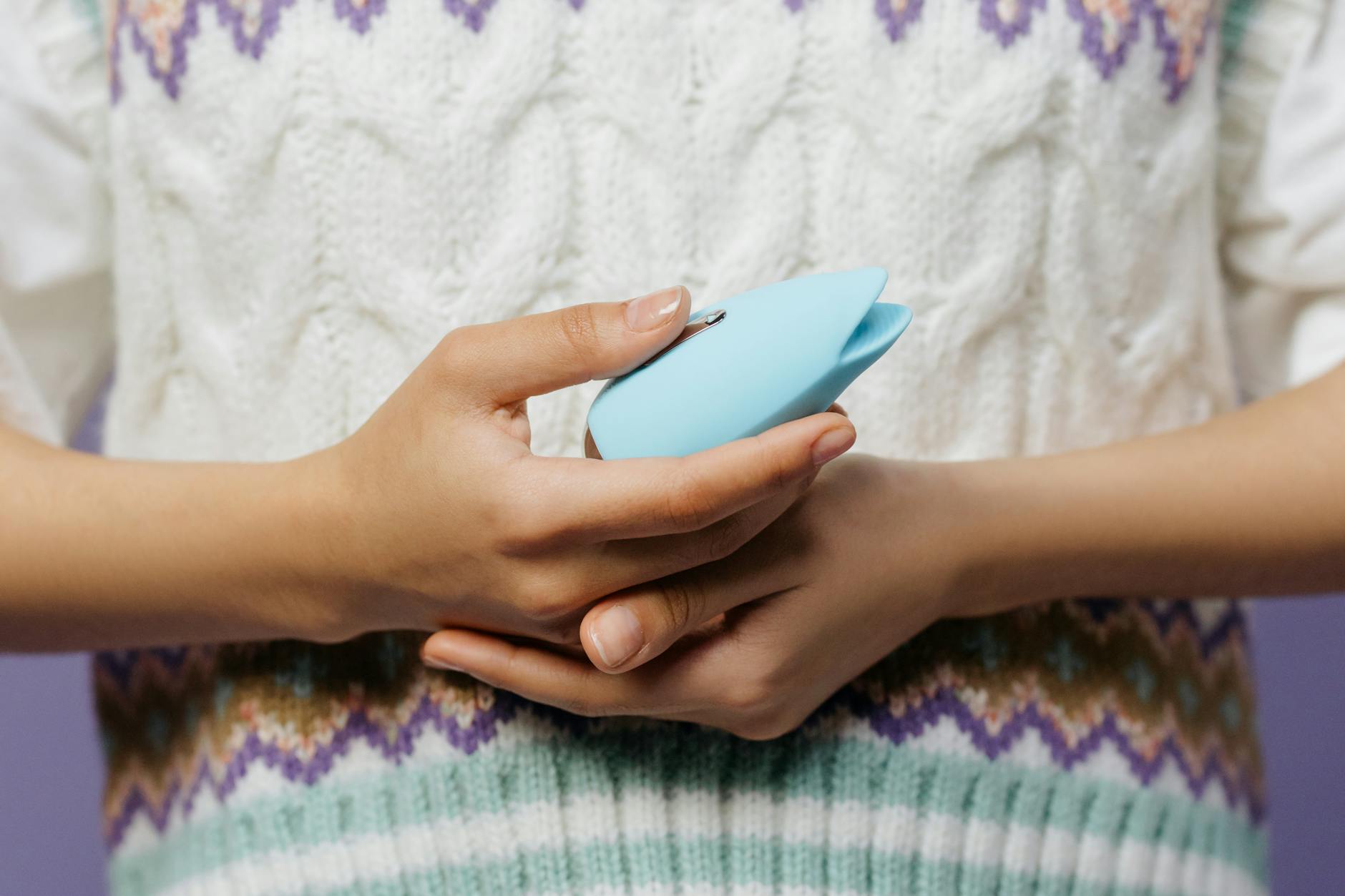
Let's talk about what actually happened to your body
You grew another human. You delivered them. Your hormones dropped like a stone. Everything hurts, nothing feels like you, and the idea of sex sounds about as appealing as root canal work. Postpartum desire loss isn't laziness. It's not a relationship problem (yet). It's biology doing what biology does after the most physically demanding event most of us will ever experience.
Here's the thing nobody says clearly: your desire won't magically return when you're "ready." It needs a little nudge. That's where a lemon clitoral vibrator comes in.
Why desire tanks after childbirth (and why it's normal)
Three things are happening at once. First, oxytocin is flooding your system. It's bonding you to your baby, but it's also making your body feel like it's already been touched enough, thank you very much. Second, your estrogen and testosterone have bottomed out, especially if you're breastfeeding. Third, you're sleep-deprived, touched-out, and running on less fuel than a phone at 2 percent battery.
Add in the fact that your vulva and perineum may still feel tender, swollen, or numb six months out, and you've got a recipe for zero sexual interest. This is completely common. Studies show that 40 percent of women report low desire at six months postpartum, and 25 percent still do at a year. You're not broken. You're recovering.
Why traditional vibrators don't always work during postpartum recovery
If you tried a standard vibrator and it felt too intense, too uncomfortable, or just plain wrong, that's not a sign you're not "ready yet." It's a sign you need a different tool. Direct vibration on sensitive, swollen, or hormonally depleted tissue can feel like too much. The pressure might feel invasive rather than pleasurable.
A lemon vibrator (also called an air-suction clitoral vibrator) works differently. Instead of vibrating, it uses gentle suction and pulsing waves that stimulate the clitoral complex without direct friction. This matters enormously during recovery. Your tissue doesn't need to be bruised; it needs to be woken up gently. The Lem and similar tools use a completely different mechanism that respects postpartum bodies.
The physical changes that affect pleasure right now
Your clitoris is still there, and the nerve endings are fine. But several things have shifted. Tissue that was full of blood during pregnancy is now deflating. Hormones that were keeping everything plump and responsive have evaporated. If you're breastfeeding, prolactin is actively suppressing estrogen. Your pelvic floor might be either too tight (from tension and guarding) or too loose (from stretching).
None of this is permanent. But it does mean that what worked for you before pregnancy might not work now. That's not a referendum on your sexuality. It's just a fact about postpartum physiology. And it means you get to explore what does work.
How to start rebuilding desire: a four-step approach
First, separate pleasure from obligation. If you're waiting for desire to return so you can "give sex back" to your partner, stop. You're not behind. You don't owe anyone access to your body right now. Rebuilding desire for yourself is the only valid reason to do this.
Second, start small and alone. The first time you explore a lemon clitoral vibrator postpartum should be by yourself, when you're not touched out, probably not while the baby is awake. Five minutes of exploration beats nothing. You're gathering data about what your body can feel right now. That's the entire goal.
Third, use a lemon vibrator on the lowest setting for the first few sessions. Don't jump to intensity. The point is to wake up the neural pathways, not to achieve orgasm. You're rebuilding a conversation between your brain and your body. Whisper first. Shouting can come later.
Fourth, understand that you might not feel much at first, and that's fine. Postpartum numbness is real. Your tissue might feel disconnected from your brain. This is often temporary, especially as your hormones stabilize over the coming months. Keep trying. The sensation usually comes back.
When to introduce partner involvement
If you have a partner, the question of when to bring them into your recovery is delicate. Here's what I recommend: wait until you've spent time alone exploring and have at least a vague sense of what feels okay. This isn't about excluding your partner. It's about you getting baseline data about your own body before adding another person's expectations into the mix.
When you do include a partner, be ruthlessly honest about what actually feels good versus what you think should feel good. "That's nice but it's too much" is a complete sentence. Your partner getting pleasure from watching you explore a lemon vibrator is fine. Your partner pressuring you to move faster than your body can handle is not. Draw the line clearly.
Timing matters: when in postpartum recovery to start
If you've had a vaginal delivery, six to eight weeks is the standard medical clearance. But cleared doesn't mean ready. If your perineum is still tender, if you're still bleeding heavily, if the thought of anything touching that area feels violating, wait. Medical clearance and emotional readiness are two different things.
If you've had a cesarean, the same applies. The incision needs to be fully healed, usually eight to twelve weeks. But again, being cleared isn't permission to ignore your actual comfort level. Some people feel ready at three months postpartum. Others need six or nine. Both are normal.
One wild card: if you're exclusively breastfeeding, you might not feel any sexual desire until you wean or mix-feed. That's not a defect. It's hormones. A lemon vibrator can still help rewaken pathways, but it's worth knowing you might be swimming upstream hormonally. That's not failure. That's just biology.
The role of lubrication during postpartum recovery
Postpartum vaginal tissue is often drier than usual, partly from hormones and partly from breastfeeding. Water-based lubricant is non-negotiable. This isn't about needing it because something's wrong. It's about being kind to tissue that's already been through a lot.
Apply the lube generously. You're not aiming for some perfect aesthetic amount. You're aiming for comfortable exploration. If the lube dries out after a few minutes, add more. This is low-stakes pleasure. You're not trying to be sexy. You're trying to gently remind your clitoris that it exists.
What to expect emotionally when pleasure starts returning
Some people feel relief and joy. Some people feel guilt that they're "neglecting" their partner while recovering. Some people feel disconnected from their body and wonder if they'll ever feel sexual again. All of these are normal. Postpartum mental health and sexual recovery are tangled up together.
If you're struggling with intrusive thoughts, anxiety, or depression, that's a separate conversation that might need professional support. Rebuilding desire while wrestling with your mental health is harder, but not impossible. Give yourself credit for trying.
One thing I've noticed in my practice: many people expect desire to return smoothly, like flipping a switch. In reality, it often comes back in small moments. You notice you find your partner attractive in a new way. You think about touch differently. You have one moment of genuine interest in sex. These aren't big events. They're the beginning of rebuilding.
Making space for spontaneous desire to return
Pressure kills desire faster than anything else. If you're using a lemon vibrator because you feel obligated to "get your sexuality back," it will feel like work. If you're using it because you're curious about what your body can feel right now, it becomes exploration.
This is why having dedicated time alone matters. You get to want something for yourself, not as currency in your relationship. You get to discover what your postpartum body actually enjoys, not what you think it should enjoy.
When to talk to a doctor
If you're at nine months postpartum and you still feel completely numb, talk to your doctor or a pelvic floor physical therapist. Postpartum nerve damage is rare but real. If you're experiencing pain, burning, or intense discomfort when exploring, stop and seek help. If you suspect postpartum depression is tangling up with your desire loss, call your OB or a mental health provider. Recovery isn't just physical. It's psychological too.
FAQ: Common questions about lemon vibrators and postpartum desire
Is it safe to use a vibrator if I'm breastfeeding?
Completely safe. Nothing you do with a vibrator affects your milk supply or your baby's health. Your body is a separate entity from your baby right now. What you do for yourself is not negligent. It's necessary.
Can I use a lemon vibrator if I still have sutures or scar tissue?
If your stitches haven't dissolved and you're still in the early postpartum window, wait until they're fully healed. Once healed, a lemon vibrator is actually gentler on scar tissue than direct pressure because it uses suction and waves rather than friction. That said, if scar tissue is causing pain, see a pelvic floor physical therapist before using any toy. They can help you understand what's happening.
What if I feel absolutely nothing when I try a lemon vibrator postpartum?
Postpartum numbness is real and usually temporary. Your body might be protecting itself after trauma (even straightforward birth is still trauma to your system). Keep trying, but don't force it. The sensation usually returns as hormones stabilize and you heal. If numbness persists beyond a year, that's worth discussing with a pelvic floor specialist.
Should I use a lemon vibrator before or after I feel desire returning?
You don't wait for desire and then use the toy. You use the toy to help rewaken the capacity for desire. It's not cart-before-horse. It's more like physical therapy for your sexuality. You're activating dormant pathways.
How often should I use a lemon vibrator during postpartum recovery?
Start with once or twice a week if it feels good. You're not training for anything. You're gathering information. Some people find that consistency helps. Others find that too much pressure to perform. Follow your actual interest, not a schedule.
What if my partner wants to use the lemon vibrator with me before I'm ready?
That's a separate conversation you need to have with your partner. Rebuilding your sexuality postpartum is your timeline, not theirs. If they're pushing for faster recovery than you're comfortable with, that's worth exploring together or with a couples therapist. You deserve patience and genuine support during this phase.
The bottom line: recovery takes time, and exploration helps
Your postpartum desire loss is not a failure. Your body is not broken. A lemon clitoral vibrator isn't a magic fix, but it can be a gentle tool for exploration while your body and brain are still rewiring themselves. Start small, go slow, and remember that rebuilding desire for yourself is the only measure that matters right now. Your sexuality isn't on a clock. It's on your timeline.