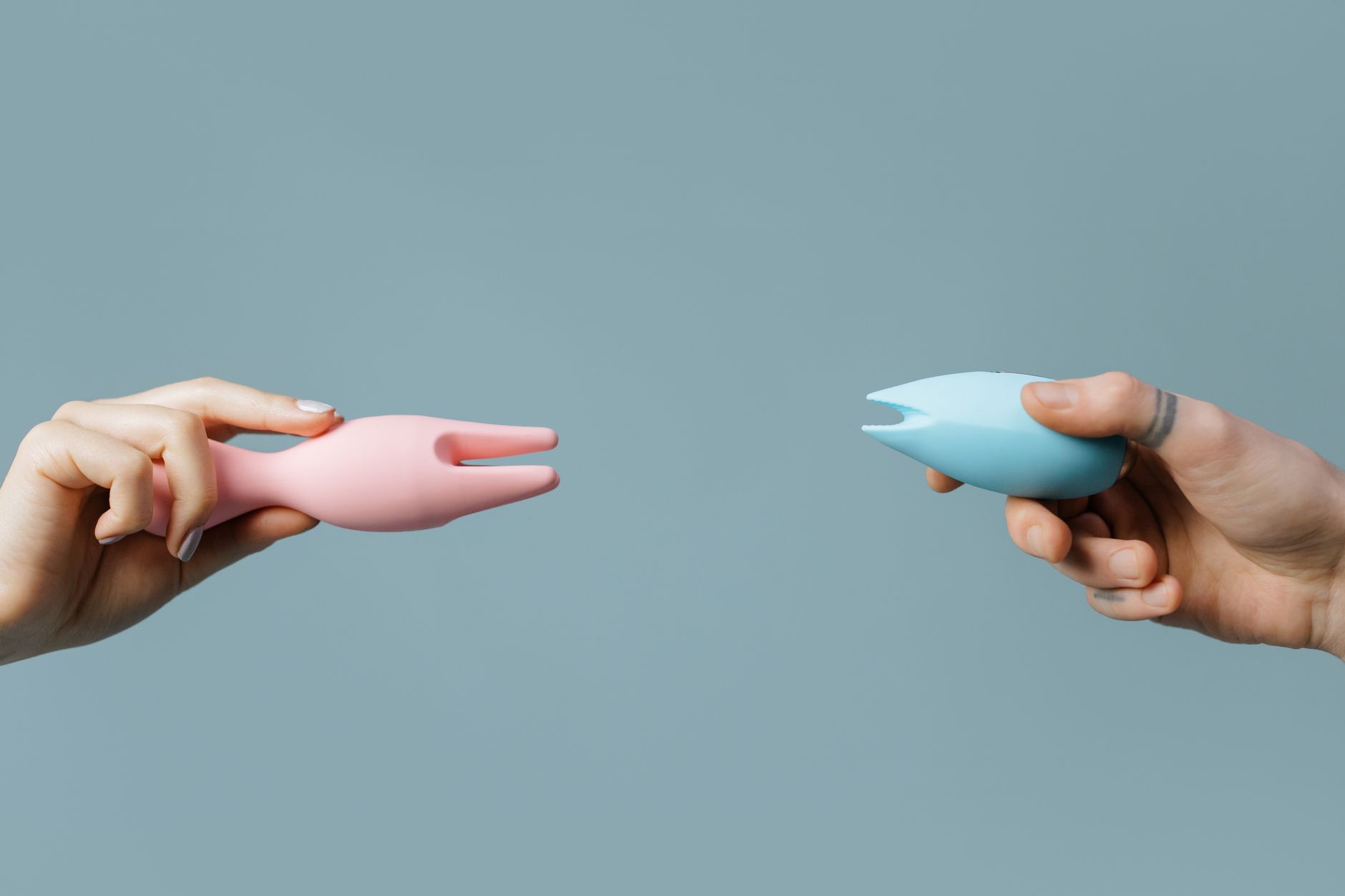
Let's be real about what a breakup does to your body
Breakups don't just hurt emotionally. They disrupt your nervous system, reset your sense of touch, and completely scramble what desire feels like. For months or even longer, your body has been attuned to one person's rhythm, pressure, presence. Then suddenly that's gone. When you try to access pleasure alone again, it can feel unfamiliar, even wrong.
This isn't weakness. This is neurobiology. Your brain rewired itself around partnership, and now it needs permission to rewire again.
Why solo pleasure feels different after a breakup
Three things happen at once:
First, there's the grief itself. Pleasure and sadness don't mix well. Your body is still processing loss, which taxes the same arousal systems you're trying to rebuild. Your parasympathetic nervous system (the one that says "it's safe to relax") is offline while your sympathetic system (fight-or-flight) runs hot. Pleasure requires the former. Breakups activate the latter.
Second, there's the habit loss. In a relationship, desire often gets triggered by a partner's presence, text, routine. When that external trigger vanishes, you have to rebuild the internal one. That's work. It's not automatic.
Third, there's the permission issue. Many people feel guilty enjoying pleasure after a breakup, especially in the first weeks or months. It can feel like betrayal, or like moving on too fast. Your mind argues with your body. Your body shuts down.
This is exactly where lemon vibrators can help. Not because they replace emotional healing (they don't), but because they create a bridge between grief and sensation that bypasses the arguments your brain is having with itself.
Why lemon vibrators work for post-breakup pleasure
Clitoral vibrators designed with suction technology, like the Hello Nancy lemon vibrator models, are gentler on overwhelmed nervous systems than traditional vibrators. Here's why that matters:
Traditional vibrators require sustained, direct pressure and focus. If your mind is fractured between numbness and grief, that pressure can feel invasive. Suction technology works differently. It creates a gentle pulling rhythm that stimulates your clitoral nerve endings without demanding the same muscular engagement or mental presence.
In other words, a lemon clitoral vibrator does more of the work for you when your nervous system is already taxed. You don't have to perform arousal or fake pleasure. The device creates physical sensation that your body can respond to without permission from your brain.
That gap between sensation and thought is where healing happens.
The emotional reset
When you use a lemon vibrator solo after a breakup, you're doing something neurologically important: you're separating pleasure from partnership. Your body learns that sensation belongs to you, not to someone else's touch or presence.
This might sound basic, but for many people in long-term relationships, that distinction fades. Your pleasure becomes intertwined with their desire, their touch, their presence. Rebuilding solo pleasure means reclaiming it as yours alone.
Start in a safe, private space. No pressure to climax. No performance. The goal isn't an orgasm, at least not at first. The goal is sensation without shame, without comparison, without your ex in the room.
Many of my clients describe this moment as the first time they felt their body again after a breakup. Not sexual, exactly. Just alive in it.
Practical steps for using a lemon vibrator during recovery
First session: Introduction only.
Don't expect anything. Lie down with your lemon vibrator, start on the lowest pattern (patterns 1-3 on most Hello Nancy models), and simply explore what it feels like. No orgasm goal. If you feel numb, that's normal. If you feel guilty, acknowledge it and keep going anyway. The nervous system needs repeated exposure to understand that this is safe.
Week two: Extend the timeline.
Add 5-10 minutes of play without the vibrator first. Touch your body, breathe, notice what's still there. Then introduce the lemon vibrator. Let it do what it's designed to do. You're reintroducing yourself to your own body's capacity for pleasure.
Week three and beyond: Permission building.
By now, your nervous system is learning that pleasure is possible without someone else. Notice what patterns feel good. Higher intensity, lower intensity, longer sessions, shorter ones. This is exploration, not performance. Your solo pleasure is allowed to be different from what you had in your relationship. Better, even.
What to expect emotionally
Pleasure might come with unexpected tears or anger. Your body is releasing grief. That's not a sign you're doing it wrong. That's a sign you're doing it right.
You might also feel guilt. You might think, "I'm moving on too fast" or "I shouldn't be enjoying this yet." Remember: accessing your own pleasure is not betrayal. It's reclamation.
Some people find that sensation returns gradually. Some experience a sudden, surprising moment of full arousal that feels like waking up. Neither timeline is wrong. Your nervous system recovers on its schedule, not on the timeline you think you should be on.
The relationship with your body after breakup
Breakups teach us something painful: pleasure is not guaranteed. Bodies change. People change. Connection changes. Using a lemon vibrator solo after a breakup isn't just about the physical sensation. It's about learning that your pleasure belongs to you, that your body's capacity for sensation is independent of anyone else's presence.
When you're ready to date again (and only when you're ready), you'll bring that knowledge with you. You'll know what your body feels like when it's alive, when it's stimulated, when it's satisfied. That knowledge is power. It protects you from settling for someone who doesn't learn your body. It protects you from abandoning yourself.
For now, the lemon vibrator is a tool for remembering what sensation feels like. That's enough.
FAQ: Pleasure after breakup
Why do I feel numb when I try to pleasure myself after a breakup?
Numbness is your nervous system's protection mechanism. After loss, your body downregulates arousal and sensation temporarily. This is normal. Repeated, gentle exposure to pleasure (through a lemon vibrator or otherwise) gradually teaches your nervous system that it's safe to feel again. Numbness usually shifts within 2-4 weeks of consistent, low-pressure exploration. If it persists beyond that, talking to a therapist can help identify what's underneath.
Should I wait to use a vibrator until I've fully healed from the breakup?
Healing isn't linear, and it doesn't require you to wait for pleasure. Actually, reconnecting with your own capacity for sensation is part of healing. Using a lemon clitoral vibrator can support emotional recovery by helping you remember that your body is yours. There's no "right time" to start. Start when you're curious, not when you're completely over it.
Is it weird to use a lemon vibrator for the first time alone after a relationship?
Not at all. Many people explore clitoral vibrators solo after a breakup because there's no performance pressure and no one's expectations to manage. A lemon vibrator doesn't compare you to anything or anyone. It just creates sensation. Some of my clients say their first solo experience with a lemon sucker was the most comfortable they'd ever felt using a toy. No judgment, no pressure.
What if I don't orgasm when using a lemon vibrator after my breakup?
Orgasm isn't the goal in early post-breakup play. The goal is reconnection and sensation. Many people find that the ability to orgasm returns gradually as their nervous system settles. If you're focused on the orgasm outcome, you're adding performance pressure back in. Let the lemon vibrator create sensation without demanding anything from you.
Can using a vibrator help me move past my ex faster?
A lemon vibrator isn't a breakup cure, but it does serve a real function: it helps your brain and body understand that pleasure exists independently of your ex. Every time you experience sensation without them, your nervous system learns something new. Over time, pleasure becomes associated with yourself, not with them. That's not moving on faster. That's moving on differently. That's ownership.
How long until solo pleasure feels normal again?
This depends on relationship length, attachment style, and how you're processing the loss. For some people, solo pleasure feels natural again in weeks. For others, it takes a few months. Most people find that regular, gentle exploration with a tool like a lemon vibrator accelerates the timeline because it removes the mental barriers. Your body wants to feel good. It just needs permission and repetition.
Moving forward on your own terms
Breakups demand that you rebuild your relationship with your own body. That's uncomfortable. It's also an opportunity. You get to discover what pleasure feels like when it's entirely yours. You get to explore a lemon vibrator without managing someone else's preferences or insecurities. You get to move at your pace.
This isn't recovery as "getting over it." This is recovery as "building something stronger on your own."
If you're struggling with the emotional weight of post-breakup healing, talking to a therapist can help. If you're ready to reconnect with physical pleasure on your own terms, a lemon vibrator is a gentle, judgment-free way to start. Your body is waiting for you to come back to it. The pleasure you deserve isn't gone. It's just been redirected toward yourself.
Sources & References
Gottman, J. M., & Silver, N. (2015). The Seven Principles for Making Marriage Work: A Practical Guide from the Country's Foremost Relationship Expert. Harmony Books.
Van der Kolk, B. (2014). The Body Keeps the Score: Brain, Mind, and Body in the Healing of Trauma. Viking.
Pozzi, G., et al. (2021). "Clitoral and Vulvovaginal Neurophysiology: A Comprehensive Review." Sexual Medicine Reviews, 9(2), 227-241.
Brotto, L. A., & Chivers, M. L. (2020). "Individual Differences in Genital Sexual Response." Current Sexual Health Reports, 12(2), 37-52.
Neff, K. D., & Vonk, R. (2009). "Self-compassion Versus Global Self-esteem: Two Different Ways of Relating to Oneself." Journal of Personality, 77(1), 23-50.