
When sensation changes, the issue isn't you
Birth control, antidepressants, thyroid meds, hormone shifts during your cycle or menopause. These all change how your body responds to touch. Not in a broken way. Just differently. And if you're using the wrong kind of stimulation for that new normal, pleasure becomes harder to find.
Here's what I've learned working with hundreds of couples navigating these shifts: the solution isn't willpower or better communication (though those help). It's matching your tools to your actual physiology right now.
How medications and hormones actually rewire sensation
Let's get specific because vagueness doesn't help anyone.
When estrogen drops, your vaginal and vulvar tissue gets thinner and dryer. This is genitourinary syndrome of menopause (GSM), and it's common after 50, during certain phases of your cycle, after hormonal birth control changes, or even with some SSRIs. The tissue itself becomes less elastic. Nerve endings stay put, but the tissue around them changes thickness.
Some medications, especially SSRIs and certain blood pressure drugs, dull the signal between your body and brain. Your nerves still fire. Your brain still processes pleasure. But there's a lag. A kind of sensory static.
Then there's the paradox: some hormonal changes make you feel sensation more sharply, while others make it feel farther away. Progesterone peaks can create a kind of numbness. Testosterone drops can flatten desire entirely, even when physical response is still possible.
The good news? These aren't permanent setbacks. They're design constraints that need a different tool.
Why lemon vibrators outperform traditional vibrators during shifts
A standard vibrator hammers the same frequency at the same intensity. That works fine for most bodies most of the time. But when tissue is thinner, nerves are less responsive, or sensation feels muted, direct vibration can feel either too intense or weirdly distant.
Lemon clitoral vibrators use air-pulse suction technology. Instead of vibration, they create gentle waves of pressure and release. Think of it like cupping your hand against your skin and releasing rhythmically, except much more refined.
Here's why this matters during hormonal shifts: suction stimulates without requiring direct friction. Your tissue doesn't have to tolerate aggressive rubbing. Nerve clusters respond to the pressure shift itself, not to constant buzzing. And because suction naturally feels less harsh, you can build intensity gradually without pain or overstimulation.
The exact setup that works when sensation feels muted
Three changes to make right now.
Start with the lowest pulse setting and spend real time there. When sensation is muted, your instinct is to jump to maximum intensity. Don't. Use settings 1 or 2 on the Lem vibrator or equivalent for at least five minutes. Let your body wake up to the pressure. Then build. This isn't laziness. It's letting your nervous system recalibrate.
Use water-based lubricant even if you think you don't need it. When tissue is thin or dry, friction increases. Lube reduces that friction and lets the suction work more efficiently. Thinner tissue actually benefits from the glide. Many clients report orgasm appears faster once they add lube.
Position matters more than usual. When sensation is scattered, angle becomes critical. Most people assume they should angle straight on. Try positioning the Lem at a slight angle, about 20 to 30 degrees from center, toward the left or right depending on your anatomy. This targets the nerve cluster without requiring more pressure.
When sensation feels sharp or oversensitive instead
Some hormonal phases or medications do the opposite: sensation becomes almost painful, or the clitoris feels too raw to touch directly.
If this is you, use the Lem on the gentlest setting over light clothing. Seriously. A thin layer of cotton between your body and the toy can be enough to lower intensity while keeping the suction benefit. Or hold it farther away, so the pressure wave reaches you more diffusely rather than concentrated.
Give yourself permission to use less intense stimulation than you used to. This isn't a step backward. It's adaptation.
Weaving your partner in during transition
If you're with someone, this is the moment to separate two conversations that usually get tangled.
Conversation one: "My body is responding differently right now because of [medication, cycle, menopause, etc.]." That's a fact, not a critique. Your partner hearing this without defensiveness is step one.
Conversation two: "Here's what works better for me right now. Let's figure this out together." This is where you actually co-create a new rhythm. Many people find that introducing a lemon clitoral vibrator into partnered sex during hormonal shifts actually deepens connection because you're both learning something new rather than trying to recreate the old normal.
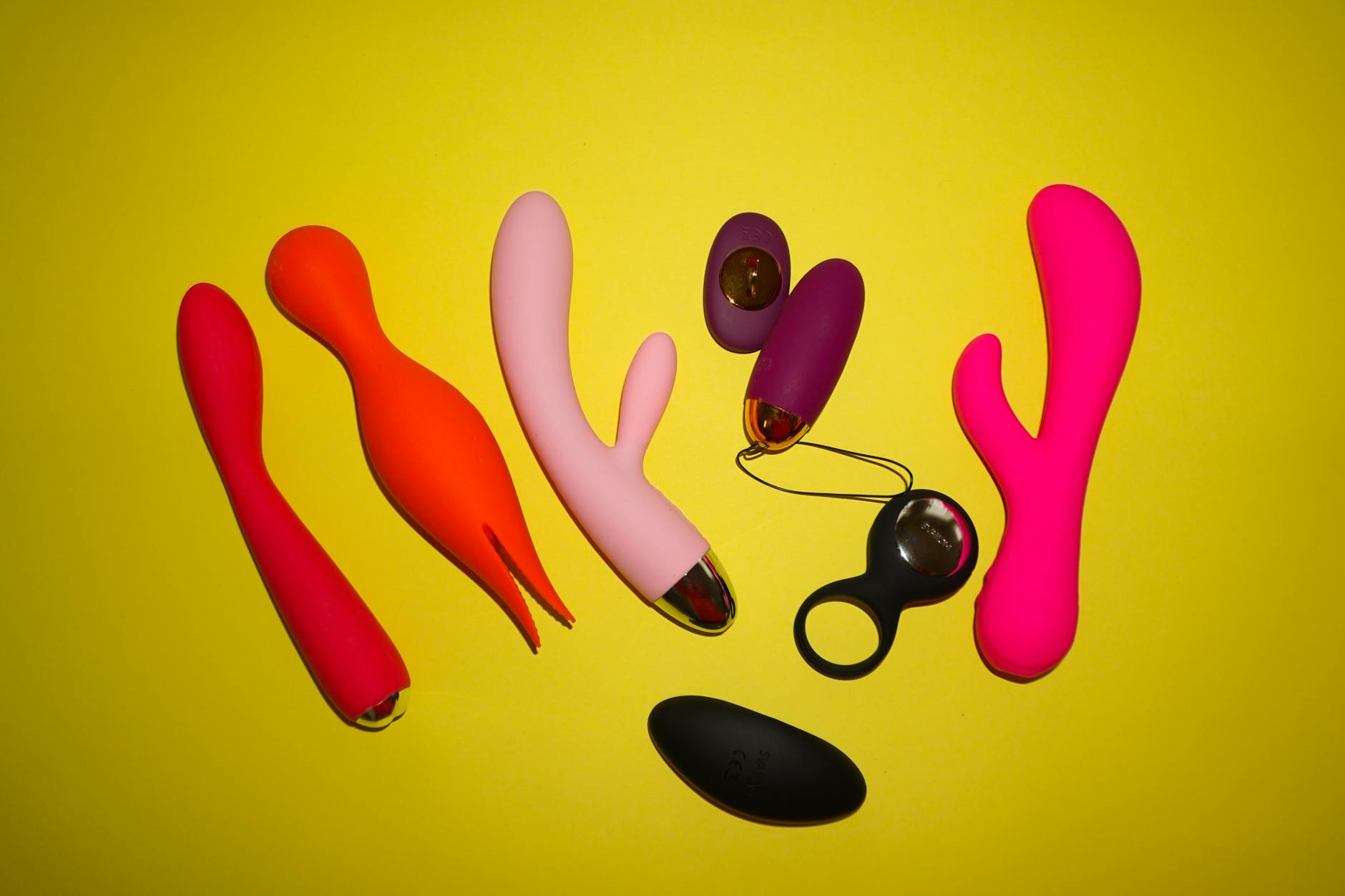
Photo by FounderTips on Pexels
When to loop in your doctor or therapist
If sensation loss is severe or sudden, mention it at your next appointment. It matters because it could signal a medication adjustment you hadn't considered. Some SSRIs numb sensation more than others. Your dose might be higher than necessary. A simple conversation can sometimes shift everything.
Also, and this is important: if pain shows up where there wasn't pain before, don't white-knuckle through it. Mention it. Genitourinary syndrome, pelvic floor tension, and medication side effects are all treatable. Getting ahead of it makes pleasure recovery exponentially faster.
Tools beyond the vibrator that amplify sensation when it's muted
Lube matters, but so does time. Give your body 15 to 25 minutes of warm-up before you even touch your genitals. Massage, kissing, breath work. Your nervous system needs time to shift out of daily stress mode.
Temperature play can help too. Warm hands, cool lube. The contrast wakes up sensation. Some people find that a warm shower before partnered sex lowers their threshold for pleasure because blood flow is already elevated.
And honestly, setting matters. Pressure, interruptions, performance anxiety. These are sensation killers no matter what medication you're on. Carve out real time.
The timeline for recalibration
Hormonal shifts take weeks to months to stabilize. Medication changes sometimes take that long too. If you just switched birth control or started an antidepressant, give yourself at least four to six weeks before concluding that sensation has permanently changed. Your body is still adjusting.
Meanwhile, using a lemon vibrator at the right intensity during this window actually helps. Your clitoris is still responding. You're just matching the tool to the current reality.
People also ask
Can I use a lemon vibrator while taking SSRIs?
Yes, absolutely. SSRIs can flatten sensation, but they don't eliminate it. A lemon clitoral vibrator often works better than traditional vibrators during SSRI use because the suction-based stimulation is gentler and more diffuse than direct vibration. Many users report needing a longer warm-up time but ultimately getting to orgasm with consistent use. If orgasm remains completely absent after several weeks, mention it to your prescriber. A dose adjustment or medication swap sometimes helps.
Does hormonal birth control permanently change sensation?
No. Hormonal birth control changes sensation while you're on it, but sensation typically returns to baseline within a few weeks of stopping. During active use, many people find that a lemon vibrator helps because it doesn't rely on the same responsive architecture that hormones alter. If you're considering switching methods because of sensation loss, talk to your gynecologist first. There are often simple adjustments that help.
How long does it take to feel orgasm again after starting a new medication?
Varies. Some people notice shifts within days. Others take four to eight weeks as their nervous system adjusts. Don't panic at two weeks. Do mention it to your doctor if you're still experiencing complete numbness at eight weeks. That's worth a conversation about dosing or alternatives. In the meantime, a lemon vibrator can help you stay connected to your body during the adjustment.
Is reduced sensation after menopause permanent?
It's not permanent in the sense of "forever gone," but it does persist as long as estrogen is low. That said, many post-menopausal people report their most satisfying orgasms ever, even with lower estrogen. Why? Because reduced sensation doesn't mean no sensation. It means different sensation. A lemon vibrator is often the key because it works with thinner tissue and lower overall responsiveness rather than fighting it.
Can a partner help if my sensation is muted?
Yes. First, understand that muted sensation is not your partner's fault and not fixable through effort alone. A partner can help by giving themselves permission to slow down, use more lube, and experiment with a lemon clitoral vibrator together. Many couples find that introducing a toy during this phase actually increases intimacy because you're both learning something new and collaborating instead of performing old choreography. Communication is the actual tool. The vibrator is just the apparatus.
What if sensation has been low for years?
If it's been a long time, it might not be about current medications or hormones. It could be pelvic floor tension, desensitization from using the wrong tool for too long, or just that your body's baseline is naturally lower than cultural narratives suggest it should be. All of these are worth exploring with a pelvic floor physical therapist. A lemon vibrator can be part of the recovery toolkit, but so can breath work, manual therapy, and sometimes medication adjustments.
The bottom line
Hormonal shifts and medication changes are real. They reshape sensation. That's not failure. That's biology. The couples and individuals I work with who adapt fastest aren't the ones who push through. They're the ones who match their tools, expectations, and communication style to their actual physiology right now. A lemon clitoral vibrator often becomes the bridge between your old normal and your new one. Give it time, use it at the right setting, and stay curious about what your body is actually asking for.
Ready to explore? Start with the lowest intensity, use lube, and commit to at least five sessions before deciding whether it works for you. Your sensation isn't broken. It's just rewritten. The Lem and tools like it are designed to read that rewrite.