Let's talk about what pelvic pain actually does to your pleasure
Pelvic pain doesn't just hurt. It rewires your nervous system. Your brain starts treating the pelvic region as a threat zone. Even when the physical pain begins to heal, your nervous system stays on guard. Pleasure requires trust in your body. Pelvic pain breaks that trust. The good news: a lemon vibrator can help you rebuild it, but only if you understand what you're actually trying to do.
You're not trying to push through. You're retraining your nervous system to recognize sensation as safe.
Why lemon vibrators work better during pelvic pain recovery
Most vibrators deliver broad, diffuse stimulation. That can feel threatening to a nervous system in protection mode. Lemon clitoral vibrators, by contrast, use gentle suction and targeted air-pulse technology. The sensation is localized, predictable, and entirely within your control. You're not fighting friction against sensitive tissue. You're receiving a gentle, rhythmic touch that your nervous system can learn to interpret as safe instead of alarming.
There's also the psychological component. Traditional vibrators feel clinical. A lemon vibrator has a shape designed specifically for external clitoral pleasure. The tactile quality is different. Your brain registers it differently. That matters more than you'd think when you're retraining your entire nervous system around pleasure.
The graduated exposure model (how to actually restart sensation)
Here's the framework I recommend to clients recovering from pelvic pain:
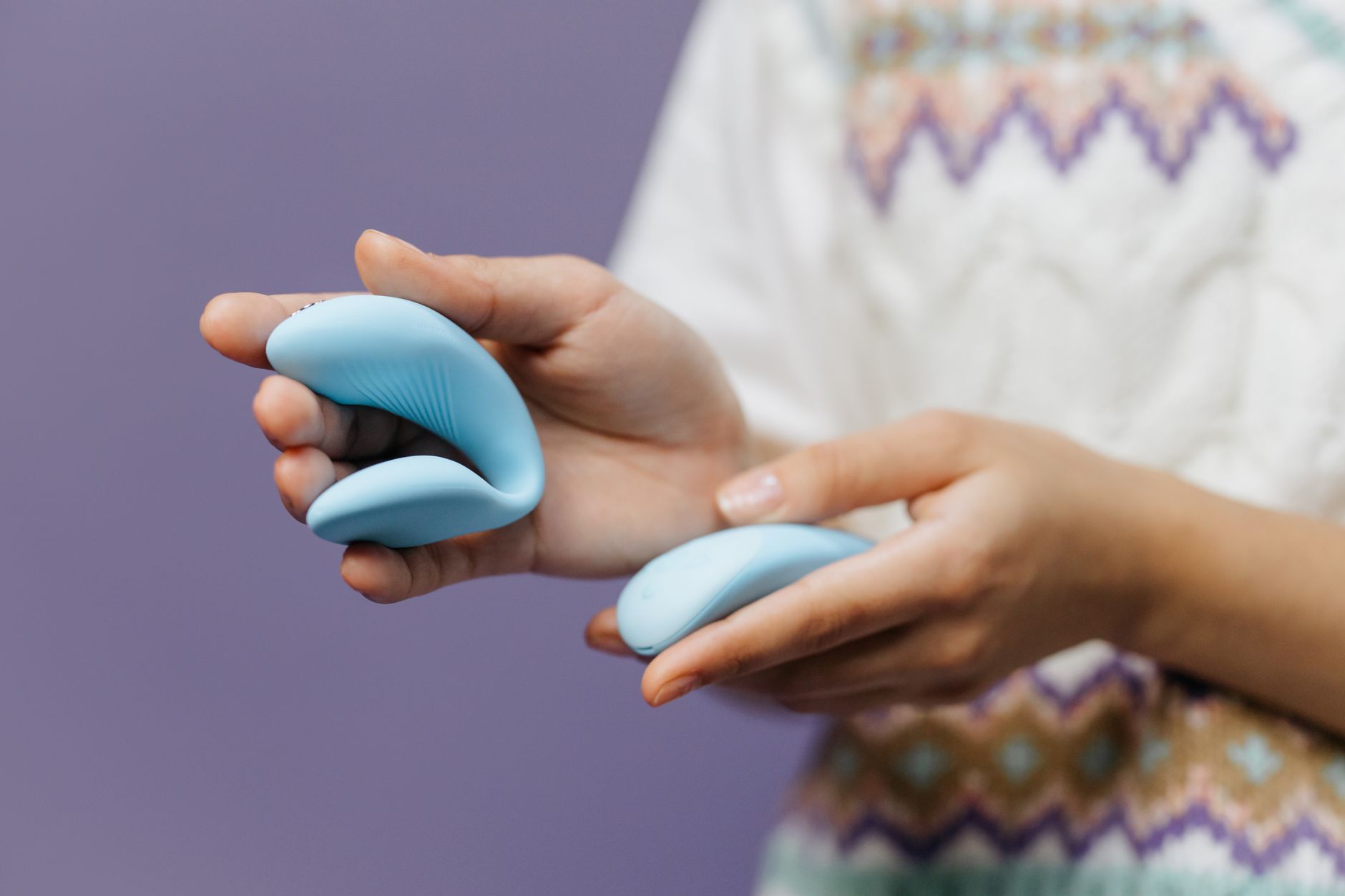
Phase 1: Presence without stimulation (weeks 1-2). Hold the lemon vibrator. Don't turn it on. Feel its weight in your hand. Let your nervous system get used to the object being near your body without any demand for arousal. This sounds slow. It is. It's also essential. You're sending your nervous system the message: this object is safe.
Phase 2: Low-frequency touch (weeks 3-4). Turn the vibrator on at pattern 1 or 2. The lowest settings. Touch it to your inner thigh, your lower belly, anywhere except the clitoral area for now. You're building a positive association with the sensation of vibration without the pressure of needing to perform or respond.
Phase 3: Indirect clitoral contact (weeks 5-8). Now move toward the clitoris, but don't press directly. Rest the vibrator against your labia or the clitoral hood. You're getting close to pleasure, but still maintaining a buffer. This is where many people start to feel genuine sensation returning. Don't rush past this phase.
Phase 4: Direct, low-intensity contact (week 9 onward). Only now, if you're feeling ready, move to direct clitoral contact. Start at patterns 1-2. Stay there. Don't escalate just because you can. The goal is to prove to your nervous system that pleasure is available without pain returning. That proof happens through repetition at low intensity, not through pushing toward higher sensation.
What your nervous system actually needs during this process
Three things matter more than anything else:
Predictability. Your nervous system is hypervigilant. It needs to know exactly what's coming. That's why gradual progression works better than spontaneous exploration. Each session should follow the same structure. Your nervous system relaxes when it knows what to expect.
Control. You need to be holding the lemon vibrator. You need to decide when it touches you, where, and for how long. This isn't about your partner helping you recover. This is about you proving to your own nervous system that you have complete agency over sensation. That agency is what rebuilds trust.
No pressure to perform. You're not trying to orgasm. You're not trying to become aroused. You're trying to rebuild the neurological pathway between stimulation and pleasure. Those are completely different goals. The moment you add the pressure to feel something, you've switched into performance mode, and your nervous system locks down again.
Many of my clients find that the first orgasm after pelvic pain recovery doesn't happen during this graduated protocol. It happens weeks or months later, spontaneously, when they're no longer trying. That's exactly how it should work.
The role of lubrication and comfort (it's not what you think)
During pelvic pain recovery, lubrication serves a different purpose than it usually does. You're not using it to reduce friction for penetration. You're using it to create a buffer between the vibrator and your tissue, to signal to your nervous system that this is a pleasure activity, not a medical one.
Use a water-based lubricant even if you don't strictly need it. The slickness changes the sensation in a way that your nervous system reads as safe and pleasurable rather than invasive. Apply it generously. There's no such thing as too much lube during pelvic pain recovery.
Comfort matters equally. You might use the lemon vibrator lying down in bed with pillows supporting your lower back. You might prefer sitting. Some people find that kneeling with the vibrator helps them feel grounded. There's no correct position. The correct position is whichever one lets your nervous system relax completely.
When to incorporate a partner (if you want to)
If you're in a relationship, your partner's role during pelvic pain recovery is not to participate in pleasure. It's to provide emotional safety. That might mean they sit nearby while you explore. It might mean they hold your hand. It might mean they're in another room, fully unavailable, so you have complete privacy.
Many couples rush to try partnered sex again as soon as physical pain improves. That's usually a mistake. Your nervous system associates partnership with the injury. Rebuilding sensation alone, first, then gradually reintroducing your partner once you've proven to yourself that pleasure is available, is the sequence that works.
When you do want to involve your partner, it's not about them using the lemon vibrator on you. It's about them being present as a witness to your pleasure. That's a different kind of intimacy entirely. It helps your nervous system recalibrate partnership as something pleasurable instead of something threatening.
Physical considerations (what to watch for)
If you experience sharp pain, burning, or increased tension in your pelvic floor at any point, stop immediately. Don't push through. Pain is information. Pelvic pain recovery isn't about overriding your body's signals. It's about teaching your body new signals.
Some people find that pelvic floor tension actually increases when they try to use a vibrator early in recovery. This is normal. Your pelvic floor tightens as a protection response. If that happens, take a break. Come back to the graduated protocol later. There's no timeline you're supposed to hit.
If pelvic pain has been severe or long-lasting, working with a pelvic floor physical therapist alongside this protocol makes a significant difference. A good pelvic floor PT can help you understand whether your tissues are ready for vibrator use and can provide additional tools for nervous system regulation that complement what you're doing at home.
The mental game (why your thoughts matter as much as your technique)
During pelvic pain recovery, every time you touch a vibrator to your body, you're running an experiment. You're testing the hypothesis: "Is pleasure available to me without pain?" If you go into that experiment expecting pain, your nervous system will find it.
This isn't positive thinking. This is neuroscience. Your nervous system looks for threats. If you're waiting for pain to return, your nervous system will interpret normal sensation as threatening. The work is to gently, repeatedly, prove that pleasure can exist independently of pain.
Some days you'll feel that proof clearly. Other days you'll feel stuck. Both days are part of recovery. The lemon vibrator is just a tool. The real work is the conversation you're having with your own nervous system about what's safe.
FAQ
How long does pelvic pain recovery typically take with a lemon vibrator?
Recovery timelines vary wildly depending on what caused the pelvic pain, how long you experienced it, and your individual nervous system. Some people restart sensation in 4-6 weeks. Others take 3-6 months. The lemon vibrator accelerates the process by providing a safe, graduated way to reintroduce stimulation, but it doesn't bypass the nervous system's timeline. Trust the process more than the calendar.
Can I use a lemon vibrator if I have vaginismus or pelvic floor dysfunction?
Vaginismus and pelvic floor dysfunction often coexist with pelvic pain. Yes, you can use a lemon clitoral vibrator, but the graduated protocol becomes even more important. You're working with an even more protective nervous system. Stay in Phase 1 and 2 longer. The vibrator should never touch the vaginal opening if vaginismus is present. Clitoral stimulation only, external, at very low intensities. A pelvic floor PT is especially valuable here.
What if I'm recovering from pelvic pain but my partner wants to be involved right away?
That's a conversation that needs to happen outside the bedroom. Explain to your partner that pleasure recovery is a solo project first. It's not because you don't want intimacy with them. It's because your nervous system needs to learn that pleasure is available independently of partnership before partnership becomes part of the pleasure equation again. Set a timeline for when you might be ready for partnered exploration. Most partners understand when it's framed as a necessary step toward reconnection, not a rejection.
Is a lemon clitoral vibrator better than other vibrator types during pelvic pain recovery?
Yes, for most people. Air-pulse lemon vibrators feel gentler and more controlled than traditional vibrators. The suction sensation is different neurologically than traditional vibration. It's easier for an already-threatened nervous system to interpret as safe. That said, if a different vibrator feels better to you, that's what matters. The best tool is the one your own nervous system finds safest.
Can pelvic pain recovery happen without any vibrator at all?
Absolutely. Some people prefer to restart sensation through manual touch, partnered exploration, or time and presence alone. A lemon vibrator isn't required. It's a tool that works well for many people because of its design and sensation profile. But if touch-based recovery feels right to you, that's a completely valid path.
When should I see a healthcare provider about pelvic pain?
If you're experiencing pelvic pain at all, you should have been evaluated by a healthcare provider to rule out treatable conditions like infections, endometriosis, or structural issues. Recovery from pelvic pain isn't something you do entirely alone. A combination of medical evaluation, possibly pelvic floor physical therapy, and nervous system retraining through tools like a lemon vibrator creates the best foundation for actual healing. Don't assume pleasure recovery is on you to fix entirely.
The bottom line: pleasure is your birthright, even after pain
Pelvic pain tells your nervous system that your body is unsafe. The job of pelvic pain recovery is to tell it the opposite. A lemon vibrator, used with patience and graduated intention, is one of the most effective ways to do that. Your nervous system rewired itself around pain. It can rewire itself around pleasure again. It just needs the right conditions: predictability, control, time, and the specific sensation profile that a lemon clitoral vibrator provides.
You deserve to feel good again. Not just physically, but in your capacity to trust your own body. That's what this recovery is really about. The pleasure is the proof.