Let's start here: pleasure is an act of reclamation
Divorce strips away a lot. It can feel like it strips away your sense of desirability, your confidence in your body, even your right to want things for yourself. Here's what I've seen in my practice after decades of working with people rebuilding their lives: pleasure becomes political. Claiming it becomes an anchor.
A lemon vibrator, used intentionally, isn't just a physical tool. It's a way of saying: my body belongs to me now.
Why divorce changes your relationship with sensation
There are three layers to this. First, the physical: after years in a partnership, your nervous system learned certain patterns of arousal, touch, and response. Those patterns were tied to another person's presence and rhythm. When that person is gone, your body sometimes doesn't know how to wake up on its own.
Second, the emotional. If the marriage ended because of sexual disconnect, betrayal, or mismatched desire, you might carry guilt or shame into solo pleasure. If it ended for other reasons, you're grieving and rebuilding simultaneously. Both are real obstacles.
Third, the practical: many people spend years accommodating a partner's preferences, timing, or insecurities. Your own desire becomes hard to hear under all that static.
A lemon clitoral vibrator works for post-divorce healing because it bypasses negotiation. There's no partner to consider, no timing to sync. Just you and sensation.
Why the lemon vibrator specifically helps post-divorce
Let me be direct about the neurology. After divorce, especially in the first 6-12 months, your nervous system is in flux. Cortisol is elevated, your sleep is disrupted, and your body's default is defensive. That means arousal takes work.
The lemon vibrator uses gentle suction rather than intense vibration. That matters because your clitoris might be hypersensitive right now, not from desire but from stress. Suction feels more like touch, more like invitation. Vibration can feel like demand.
There's also something psychologically important: the shape is small, self-contained, and doesn't require a lot of physical space or setup. You're not reclaiming a bedroom or a ritual that was coupled. You're creating something new and entirely yours.
The first time: what to expect and how to start
Honestly? The first time after divorce, you might not feel much. That's normal. Your body might be numb, or your brain might be too loud. Neither means something is wrong with you.
Here's what I recommend:
Pick a time when you're alone and not rushed. Not at 11 p.m. when you're exhausted, not right after a difficult phone call with your ex. Give yourself 20 minutes with zero obligations after.
Warm up first. Before you touch the lemon vibrator, spend 5-10 minutes on something that feels good: a hot shower, a massage of your own thighs and belly, touching yourself without any goal. Your nervous system needs permission to downshift.
Start with the lowest setting. The lemon vibrator has multiple intensity levels. Begin at the gentlest. You're not trying to orgasm. You're trying to feel.
Pay attention to what you notice. Not "does this feel good?" but "what does this feel like?" There's a difference. One has judgment baked in. The other is just observation.
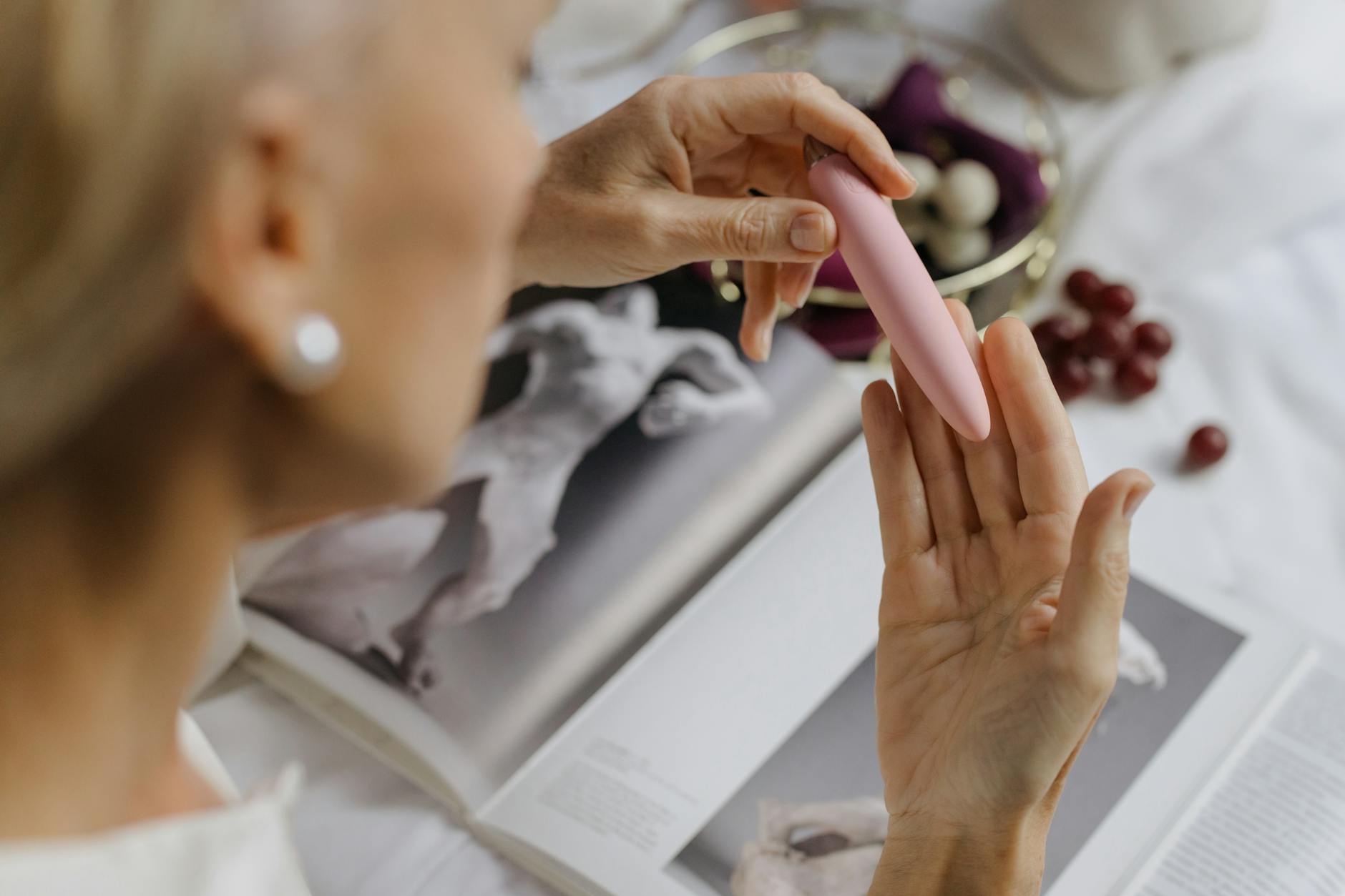
Photo by cottonbro studio on Pexels
Building a ritual that belongs only to you
Divorce often leaves you with the task of rebuilding daily rituals. Morning coffee alone. Friday nights without a plan. Solo vacations. Your body's pleasure can be part of that intentional rebuilding.
Here's what works: pick a specific time, not a vague "whenever." Maybe Sunday mornings before the week starts, or Wednesday evenings when you're stuck in the midweek slump. Consistency teaches your nervous system that this time is safe, predictable, and yours.
Creates a physical space. It doesn't have to be elaborate. A favorite blanket, a pillow that smells like something you love, your bedroom door locked. The ritual is as much about the container as what happens inside it.
Use a water-based lubricant. Your body might not be producing natural lubrication yet, and that's fine. Adding lubrication isn't cheating or a failure. It's meeting your body where it is right now.
Turn off your phone. This is non-negotiable. Your ex, your lawyer, your worried friends can wait 20 minutes.
The emotional work underneath the physical sensation
This is where I usually see people get stuck. You buy a lemon vibrator. You set aside time. And then your brain floods with thoughts like: "What's the point?" or "I should be healing in a different way" or worse, "My ex would have..." and then your body shuts down.
That's your nervous system doing its job, which is protecting you. But you can work with it.
The easiest reframe: this isn't about performance or achievement. You're not trying to prove something. You're not trying to erase the marriage. You're simply reclaiming a part of yourself that belongs to you. That's it.
If grief comes up during solo pleasure, that's also fine. Many people cry while using their lemon vibrator in the first months after divorce. Your body is processing. Let it.
If anger comes up, channeling that into intensity or speed with the lemon vibrator can be grounding. You're not being aggressive toward yourself. You're being present with what you actually feel.
Some people find that exploring pleasure at your own pace after solo gaps helps rebuild trust in their body's signals. That same principle applies post-divorce.
When desire is flat and touching yourself feels wrong
I want to name this directly because it's common and it's not talked about enough. After divorce, some people experience a complete absence of desire. Not low desire. Absence. The lemon vibrator sits in a drawer and you can't imagine caring about using it.
That's often not about the vibrator. That's about depression, grief, or your nervous system being in survival mode. It's worth checking in with a therapist or doctor about. Divorce is trauma, even when it's the right choice.
What I usually suggest: keep the lemon vibrator accessible, but release the expectation. Sometimes the act of knowing it's there, knowing you have the option, is enough. Your body will let you know when sensation feels possible again. Pushing too hard backfires.
One practical thing that helps: sometimes starting with non-sexual touch feels better. Massaging your own legs. Touching your neck or collarbones. Your clitoris isn't the only place pleasure lives. Expanding where you allow sensation can lower the stakes.
Reconnecting with partners down the road
If you start dating again, the lemon vibrator can stay part of your solo practice. Full stop. This is your pleasure, not something you're doing for a future partner.
That said, some people find that using a lemon vibrator early when dating helps establish what you actually like before the complexity of partnered sex. You know what sensation makes your nervous system calm down. You know what speed and intensity work for your body right now. That knowledge is power.
If a new partner wants to be involved, that's a conversation. But the first conversation you're having is with your own body. Everything else follows.
FAQ: Rebuilding Pleasure After Divorce
How long does it usually take to feel pleasure again after divorce?
There's no timeline. Some people feel sensation return within weeks. Others take months or years. Your brain and body have been in protective mode. That takes time to soften. What matters more than speed is consistency and self-compassion. Using your lemon vibrator once a week without pressure is more valuable than forcing daily use out of guilt.
Is it normal to feel guilt using a lemon vibrator after divorce?
Completely normal. Many people internalize the narrative that pleasure is something you share, something mutual. Using a solo toy can feel selfish or like a failure. Reframe it: you're not replacing partnership. You're meeting your own needs while you're alone. That's not selfishness. That's self-care.
Can I use the lemon vibrator if I have no desire at all?
You can, but you shouldn't feel obligated to. If desire is completely absent, that's often a sign your nervous system needs other support first: sleep, therapy, movement, time. The vibrator will be there when your body is ready. Forcing it can actually deepen numbness.
What if I cry or feel intense emotions while using the lemon vibrator?
Your body is processing grief. That's healthy and human. Keep tissues nearby. Let it happen. Afterward, be gentle with yourself. Maybe journal about what came up. Don't pathologize tears or big feelings. They're part of reclamation.
Should I tell a new partner about using my lemon vibrator?
That's your choice. Some people share that information early. Others keep it private. What matters is that you're not hiding shame. You're simply maintaining a boundary around your solo practice. Both are valid.
How do I know if the lemon vibrator is the right tool for me post-divorce?
Try it a few times without expectation. If the sensation feels inviting rather than demanding, if you find yourself looking forward to your solo time, if it helps you reconnect with your body's signals, it's probably right. If it feels like another obligation, try a different approach. Your pleasure isn't one-size-fits-all.
The bigger picture: reclaiming your own pleasure
Divorce is an ending. But it's also a beginning. You get to decide what pleasure looks like now. You get to prioritize your own sensation without negotiating. You get to be selfish about your body in the healthiest way.
A lemon vibrator is a small tool. But small tools often do the biggest work. It says: I'm worth touch. I'm worth feeling good. My body belongs to me.
That's not a small thing after divorce. That's everything.