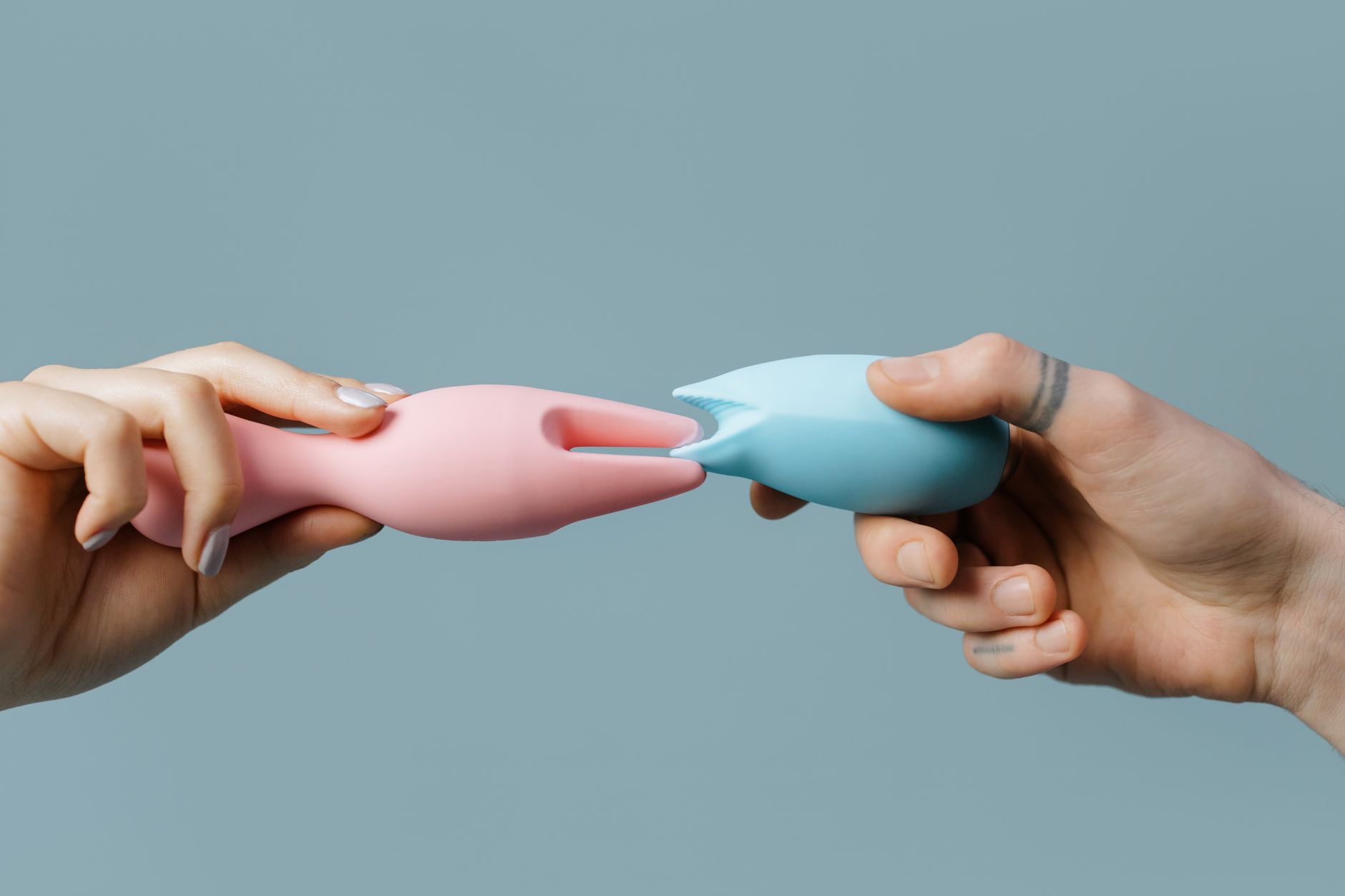
The strange gap nobody talks about
Years in a relationship, your pleasure becomes collaborative. Then it ends. Or changes. Or you find yourself solo again. And suddenly you're standing in front of solo pleasure like it's a foreign language you used to speak fluently.
Here's what I hear most from clients who've been in long-term relationships and then step back into solo play: "I don't remember what I like." Not because they've forgotten physically. But because partnership trains your body to respond to someone else's rhythm, someone else's timing, someone else's version of what feels good.
Why solo pleasure feels different after partnership
Think about what happens during years of coupled sex. Your brain learns patterns. Your body syncs to another person's arousal curve. Your attention splits between your own sensation and their experience. You might orgasm more or less than you would alone. You learn to read their mood instead of tuning into yours.
When that ends, your nervous system has to recalibrate. This isn't dysfunction. It's just adjustment.
Many people find that their first solo sessions after a long relationship feel awkward, sometimes even guilty. That's not unusual. You're rewiring pathways. Your body has muscle memory, but it's muscle memory of partnership, not of solo pleasure.
Why the lemon vibrator works for this specific transition
The lemon clitoral vibrator offers something precise: consistent, pattern-based stimulation that doesn't require you to perform or sync with a partner's timing. That's actually perfect when you're rebuilding.
Here's why it helps specifically:
Pattern learning. The Lem has multiple vibration patterns. Starting with a simple pattern and staying with it lets your body learn what intensity feels good without the cognitive load of changing techniques. This is especially useful if you've spent years focusing on partner preference over your own sensation.
No timing pressure. Solo exploration with a device means you can spend 45 minutes on one pattern or shift patterns 20 times in a session. There's zero pressure to finish for someone else's satisfaction or to match their arousal speed.
Sensory reset. After years of focusing on partnership, many people's solo sensation feels muted. The suction technology in the Lem works by stimulating the entire clitoral complex, not just surface sensation. This can feel revelatory if your body has been in "receive and respond to partner" mode.
How to actually start: the framework
Forget what worked before or what you think should work. You're rebuilding from curiosity, not muscle memory.
Session one: no expectation of orgasm. Set 15 minutes, use the lowest pattern on your lemon vibrator, and notice what you notice. Not what you think you should feel. Just observation. Temperature. Texture. How the suction feels different at different angles. This is data collection.
Sessions two through four: stay with one pattern. Pick one of the middle patterns (not the highest intensity). Use it for 3-4 sessions. Your body adapts quickly, so you want to give each pattern time to settle before adding complexity.
Sessions five onward: pattern exploration. Once you've felt what the lower patterns do, start trying the others. Notice which ones create sensation that feels familiar and which feel new. This is how you rebuild your own map.
The confidence piece matters as much as the physical
After a long relationship, solo pleasure isn't just physical. It's permission. It's reclaiming a part of yourself that was in a holding pattern.
I work with a lot of people who feel guilty about solo pleasure after partnership ends. The narrative is usually something like: "I should be past this" or "I shouldn't need this" or "This means something is wrong with me." None of that is true. Solo pleasure is completely separate from whether you want partnership. They're different things.
Using a lemon clitoral vibrator can actually help with this psychologically. There's something about choosing a tool specifically designed for your pleasure that says: "This is intentional. This is for me." It's not improvised. It's not apologetic. It's a choice.
Building back your arousal curve
After years in partnership, your arousal might not follow the same trajectory it did solo. This is normal. Some people find it takes longer to warm up. Others find they're quicker than they remember. Some find they need different mental framing entirely.
When you're using the lemon vibrator to relearn your own arousal, pay attention to what helps your body respond:
Do you need privacy that feels truly uninterrupted? Build that in. Do you need to manage anxiety about "doing it right"? Remind yourself there's no right. Do you need mental space, or do you benefit from erotica, imagination, or sensory input? Notice that too.
Your arousal curve post-relationship might be different than pre-relationship. That's not loss. That's change. And change can actually be richer if you explore it with curiosity instead of expecting continuity.
When to push, when to pause
If you're using the lemon vibrator and nothing is happening after 20-30 minutes, pause. Your body might need more mental space, more time to warm up, or you might just not be in the zone today. All three are fine.
If you're feeling emotional during or after solo sessions, that's also completely normal. Coming back to solo pleasure after a long relationship can bring up grief, relief, guilt, joy, or all of it at once. Your body is reconnecting with something that's been deprioritized. Tears or unexpected feelings aren't a sign something is wrong.
The partner question
Some people rebuilding solo pleasure eventually want to return to partnered sex. Some don't. This exploration with a lemon clitoral vibrator is just for you. It's not practice for someone else. It's not "getting back in the game." It's remembering what your body likes when the only person whose pleasure matters is you.
If you do eventually partner again, this knowledge is gold. You'll know what patterns you respond to. You'll know how long your arousal takes. You'll know whether you prefer direct clitoral stimulation or broader sensation. That's information that serves any future partnership. But that's a future conversation. Right now, it's just about you.
The timeline nobody mentions
Rebuildng your relationship with solo pleasure doesn't follow a schedule. Some people feel reconnected after a few weeks. Others take months. Some find that they naturally drift back into solo pleasure and some find they need to be more intentional about it.
The lemon vibrator can be part of that process, but it's the exploration that matters, not the tool. The tool just removes friction. You're the one doing the actual work of remembering what brings you pleasure and allowing yourself to have it.
FAQ: Returning to Solo Pleasure After Long Partnership
Is it normal to feel awkward using a lemon vibrator solo after being in a relationship?
Completely. Your nervous system spent years in a relational pattern. You're rewiring. The awkwardness usually fades within a few sessions once your body realizes this is low-stakes exploration, not performance. If guilt lingers, check in with whether there's an internalized message that solo pleasure is "selfish" or "wrong." It isn't. It's reclaiming part of yourself.
How long should I wait after a relationship ends before using a lemon clitoral vibrator again?
There's no rule. Some people need emotional space first. Some find that solo exploration helps them process the end of a relationship. You'll know what you need. If you feel like trying, try. If you need a break, take one. Solo pleasure after partnership doesn't have a deadline.
What if I can't orgasm with the lemon vibrator like I did when I was younger?
Orgasm changes. Age, stress, hormones, and whether your nervous system is in "relax and explore" mode all affect it. If you're focused on orgasm as the goal, you might miss the actual pleasure that's available. Try shifting to curiosity instead: what does this pattern feel like? What does sensation feel like now? Orgasm might follow, or it might not, and both are fine.
Is using a lemon sexual toy after a long relationship a sign I'm not ready to be solo?
No. Solo pleasure and partnership aren't opposites. Some partnered people use vibrators. Some solo people don't. Some people cycle between both. Using a lemon adult toy is just choosing an experience. It doesn't mean anything about your relationship status or readiness.
How often should I use the lemon vibrator when rebuilding solo pleasure?
Whatever feels natural. Some people do weekly sessions. Some do multiple times a week. Some find they're inconsistent at first and then settle into a rhythm. Start with what feels exciting, not what feels like you "should." Pressure kills exploration.
What if I still have emotional attachment to my ex and solo exploration feels complicated?
That's grief, not a signal to avoid solo pleasure. Both can exist. You might find that solo exploration helps you process the relationship ending by giving you space to focus entirely on yourself for a while. Or you might need more emotional distance first. Honor what you need. If you're struggling, talking to a therapist can help you untangle the emotional pieces from the physical ones.
You're not starting over. You're starting fresh.
There's a difference. Starting over implies you're trying to get back to where you were. Starting fresh means you're building something new with what you know now. Your body is different. Your preferences might be different. Your capacity for pleasure might surprise you.
The lemon clitoral vibrator is just an invitation. An invitation to explore without pressure, without performance, without syncing to someone else's timing. That's the gift. Take it. Your pleasure matters. And you deserve the space to remember exactly why.