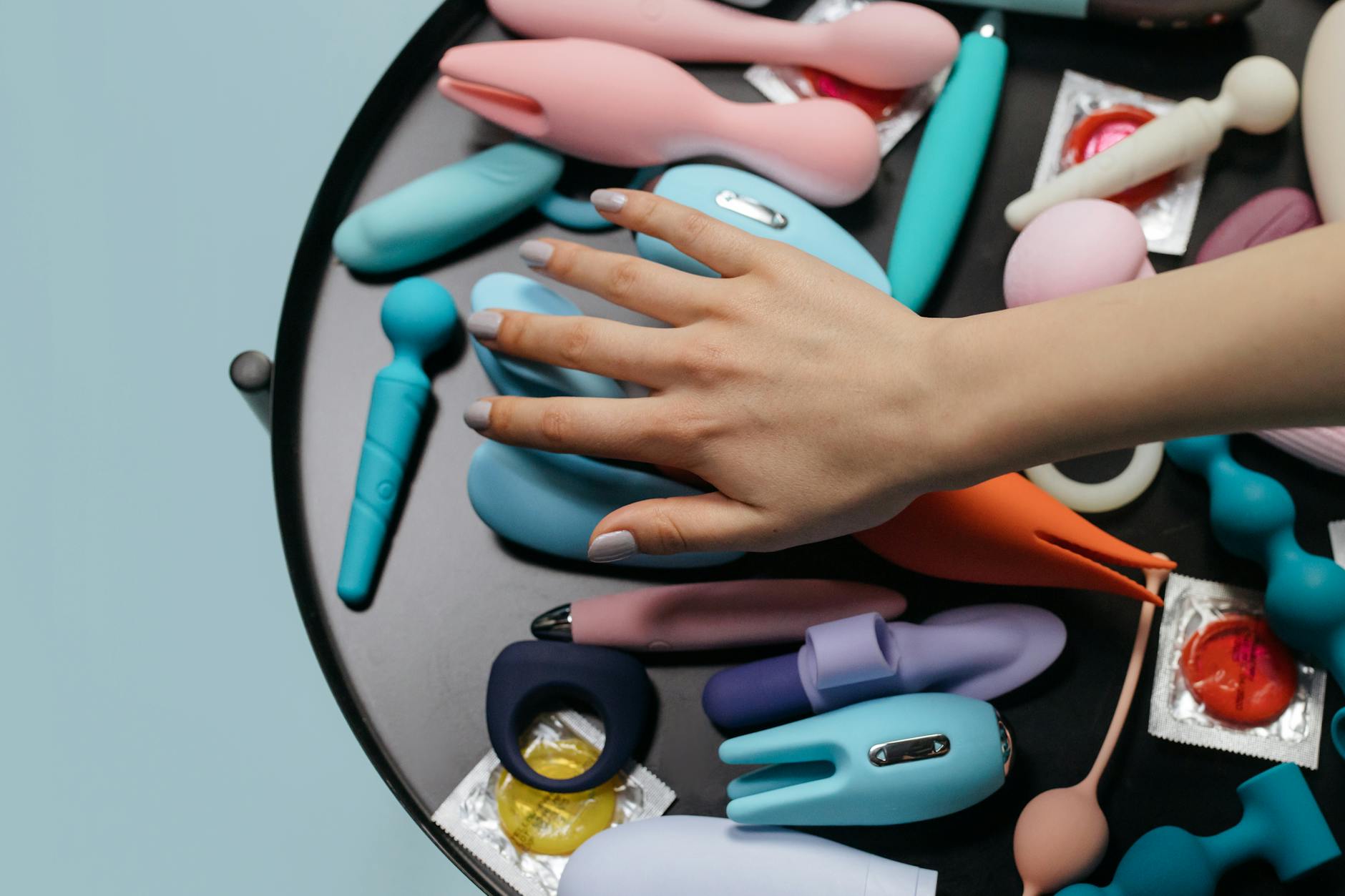
The hesitation isn't about the vibrator
Honestly, when a partner resists using a lemon vibrator or any toy, they're almost never actually worried about the device itself. What they're usually protecting is something deeper. Maybe they're afraid it means they're not enough. Maybe they think asking about toys signals they should have suggested it first. Maybe they were raised with messages that toys are shameful or cheating adjacent. Whatever it is, leading with the vibrator defeats the entire point.
So we're going to back up and start somewhere else entirely.
Name the actual fear first
This is the move that changes everything. Instead of "I want us to try a vibrator," you're going to ask: "I've noticed you seem hesitant when I mention toys. Can I ask what that's actually about for you?"
That question does three things at once. It shows you've noticed. It signals this isn't a demand. And it invites him, her, or them to be honest without performing.
Listen for the real answer. "I just don't think we need it" usually means "I'm worried you're saying I'm not satisfying you." "Toys feel weird to me" often means "I was told they're wrong and I'm still carrying that." "I don't know" might actually be "I'm embarrassed I don't know what to do with one."
Once you know what you're actually solving for, you can have a real conversation instead of a defensive one.
Separate the conversation from the device
Here's the architecture I recommend with couples. Have two separate conversations.
Conversation One: About desire and satisfaction in your partnership right now. Not theoretical. Right now. How is sex feeling for both of you? Is anyone unsatisfied? Is anyone bored? Do you both feel heard and wanted? This is the bedrock conversation. It has nothing to do with toys. It's about intimacy, frequency, and whether your partner feels chosen and desired. Spend time here. Don't rush. You might find that once this conversation happens honestly, the toy resistance melts on its own. Your partner may actually say, "Yeah, I think trying something new could be good."
Conversation Two: If the first one goes well, then you can say, "I've been curious about lemon vibrators. They feel different to me than wands. Would you be open to trying one together?" Now you're not asking for permission to feel pleasure. You're inviting collaboration. That's completely different energy.
Why a lemon clitoral vibrator specifically matters here
If your partner has hesitation about toys, a lemon vibrator is actually a better entry point than a wand or rabbit. Here's why.
Wands feel clinical and separate. They live in one spot, which can feel like a spotlight on one partner's pleasure. A lemon clitoral vibrator like the Lem uses suction, which feels more natural to the body. It's closer to the sensation of oral sex, which your partner may already be comfortable with. That familiarity lowers the "this is weird" barrier significantly.
Second, lemon vibrators are smaller and less intimidating to hold. There's something about a wand that reads as industrial. The shape and size of a lemon toy feels more like play and less like "equipment."
Third, and this matters in a partnership context: suction-based toys integrate more naturally into partnered sex. You can use it while you're together, facing each other, in ways that wands sometimes can't. Your partner isn't watching you use a tool on yourself. You're experiencing something together.
The introduction actually matters
Don't just pull it out one night. That's the fastest way to confirm your partner's fear that you're bringing in something secretly.
Instead, show them the lemon vibrator when you're both clothed and not in a sexual context. Say something like, "I picked this up because I was curious about how it would feel. Want to see it?" Let them hold it. Let them see it's just silicone. Let them press a button and hear it.
Most of the weirdness evaporates when you defang it like this. It's just a toy. It doesn't mean anything except that you're interested in your own pleasure, which is actually a good sign in a partnership.
The conversation you have before you use it together
Once your partner has agreed to try, say this explicitly: "I want to be clear. This is about adding sensation to what we already do. It's not replacing you or anything you do. It's an addition. And if at any point you want to stop, we stop. There's zero pressure."
That's the thing that dissolves most remaining hesitation. Your partner needs to know they have full agency here. They're not failing if they're uncomfortable. They're not "being weird" if they want to wait. They're not disappointing you if this particular toy doesn't work for your dynamic.
How to actually use it together the first time
Start small. Don't make it a production. You're not trying to have the best sex of your life. You're trying to see if you both feel comfortable.
One option: you use it on yourself while your partner is inside you or touching you. This removes the awkwardness of them holding it and lets you control the sensation. They get to feel you respond and stay fully present with you. A lot of partners find this is the move that shifts their entire relationship to toys. They feel the difference it makes in your body. They see you enjoying something. Resistance just vanishes.
Another option: they use it on you. This gives them agency and makes them an active participant in your pleasure. Some partners find that using a vibrator on someone they love actually builds intimacy. It's an act of generosity. It's them saying, "Your pleasure matters to me."
Try whichever feels more natural for your dynamic.
What to do if it's still awkward
Some partners warm up slowly. Some take multiple attempts before hesitation shifts to curiosity. That's fine. Don't interpret it as rejection of you.
If after two or three attempts your partner is still uncomfortable, ask: "What would make this feel more okay?" Maybe they need more time. Maybe they need to use it on you first before you use it on them. Maybe they need you to not bring it into every sexual encounter. Maybe they need professional support to examine where the resistance is actually coming from.
That last option isn't a failure. Sometimes working with a sex-positive therapist or counselor helps partners separate childhood conditioning from their actual desires. That work is valuable for the entire relationship, not just the toy question.
The longer truth
Partner hesitation about lemon vibrators usually signals something worth paying attention to. Maybe it's a sign that you haven't had the real conversation about desire, satisfaction, and feeling wanted. Maybe it's pointing to a deeper communication gap.
Use the vibrator question as a doorway to intimacy, not a workaround for it. Once you have those hard conversations about what you actually want and how valued you both feel, introducing a clitoral vibrator becomes easy. It's just a tool for what you've already built together.
People also ask
Will introducing a vibrator make my partner feel threatened?
Most partner resistance isn't actually about feeling threatened. It's about shame, confusion, or learned beliefs that sex should be a certain way. Once you have an honest conversation about that, threat usually dissolves. If your partner has a deeper insecurity about their role or your attraction, that's worth addressing with a couples therapist or relationship coach. The toy is separate from the real issue.
What if my partner wants to use a lemon vibrator but I'm the hesitant one?
That's also okay. Hesitation doesn't mean you're broken or prudish. You might be carrying messages about what sex "should" look like. You might be worried about losing spontaneity or intimacy. You might just need time. Talk to your partner about what the hesitation actually is. Often it's not the vibrator itself but fear of what it represents. Once you know that, you can address it.
Can we use a lemon clitoral vibrator during penetrative sex?
Absolutely. Many people use them during partnered sex. Your partner can use it on you while you're together, or you can. Some people use it before penetration to help with arousal buildup. Some use it during. There's no single right way. Experiment and see what feels good for both of you.
How do I bring up wanting to use a vibrator if I'm worried my partner will think I'm unhappy with them?
Lead with the desire conversation first, not the toy question. Tell your partner what you appreciate about your sex life and what you want more of, not what you want to fix. Frame the vibrator as something you're curious about, not something you need. Say something like, "I'm interested in trying new sensations together" instead of "I need a vibrator because sex isn't working." The framing changes everything.
What if my partner wants to watch me use a lemon vibrator alone before we use it together?
That's a beautiful way to ease into it. Some partners find that watching you use a vibrator on yourself is actually deeply intimate. It lets them see what brings you pleasure without having to hold the device themselves. It can build trust and curiosity. If your partner asks for this, it's not a rejection. It's a bridge.
Is it better to start with a vibrator during foreplay or during partnered sex?
Try during foreplay first. It lets you both adjust to the sensation and sound without the complexity of managing penetration at the same time. Once you're both comfortable, you can experiment with using a lemon sucker or lemon vibrator during partnered sex. Some couples find that works best. Others prefer to keep them separate. Neither is more correct.
Your pleasure matters. Your partner's comfort matters. Combining those two truths is what makes this work. Start with conversation. Everything else follows from there.