
Let's start with the thing nobody says out loud
Introducing a lemon vibrator or any clitoral vibrator into partnered sex feels risky. You're worried they'll think you're not satisfied. You're worried it'll kill the mood. You're worried they'll take it personally. And honestly, those fears are real enough that most people just don't bring it up at all. Then they suffer through sex that doesn't feel good, or they use the vibrator alone and never mention it.
That's the waste I see most often. Not the vibrator sitting in a drawer untouched. The vibrator that works brilliantly, but only when your partner isn't around.
Why the conversation feels hard (and why it isn't, really)
Here's what I know after years of working with couples: the conversation feels monumental in your head because you're conflating three separate things. You're mixing up pleasure (I want to feel better), critique (I'm unhappy with what we're doing), and logistics (We need to figure out the mechanics). Your brain is serving you all three at once, so no wonder you're frozen.
Break them apart and the conversation becomes simple.
Start with logistics. That's the easiest entry point. "I've been curious about trying something new" is a neutral opener. You're not saying your partner isn't enough. You're not saying sex is bad. You're saying you're curious. Then: "I looked into clitoral vibrators because I read that a lot of people find them really intense." That's factual. That's about external stimulation, not about them or your desire.
Most partners will either be interested or relieved. Relieved is actually common. A lot of people have assumed their partner isn't orgasming and are quietly stressed about it.
The timing conversation (equally important)
Don't ambush your partner mid-foreplay by suddenly producing a toy. I see this often. Someone brings a lemon vibrator into the bedroom without preamble and then feels hurt when their partner seems thrown off. That's not because they're rejecting the vibrator. It's because you changed the script mid-scene without checking.
Better approach: have the conversation on neutral ground. Not during sex. Not right before sex. Somewhere you can both think clearly. "I'd like to try a vibrator next time we're together. Would you be open to that?" That's your whole sentence. No justification needed.
If they say yes (most do), then: "Do you want to try it as part of foreplay, or during?" That's logistics. "Would you like to use it, or would you prefer I do?" That's preference. See how simple it is when you're just solving the puzzle instead of defending yourself?
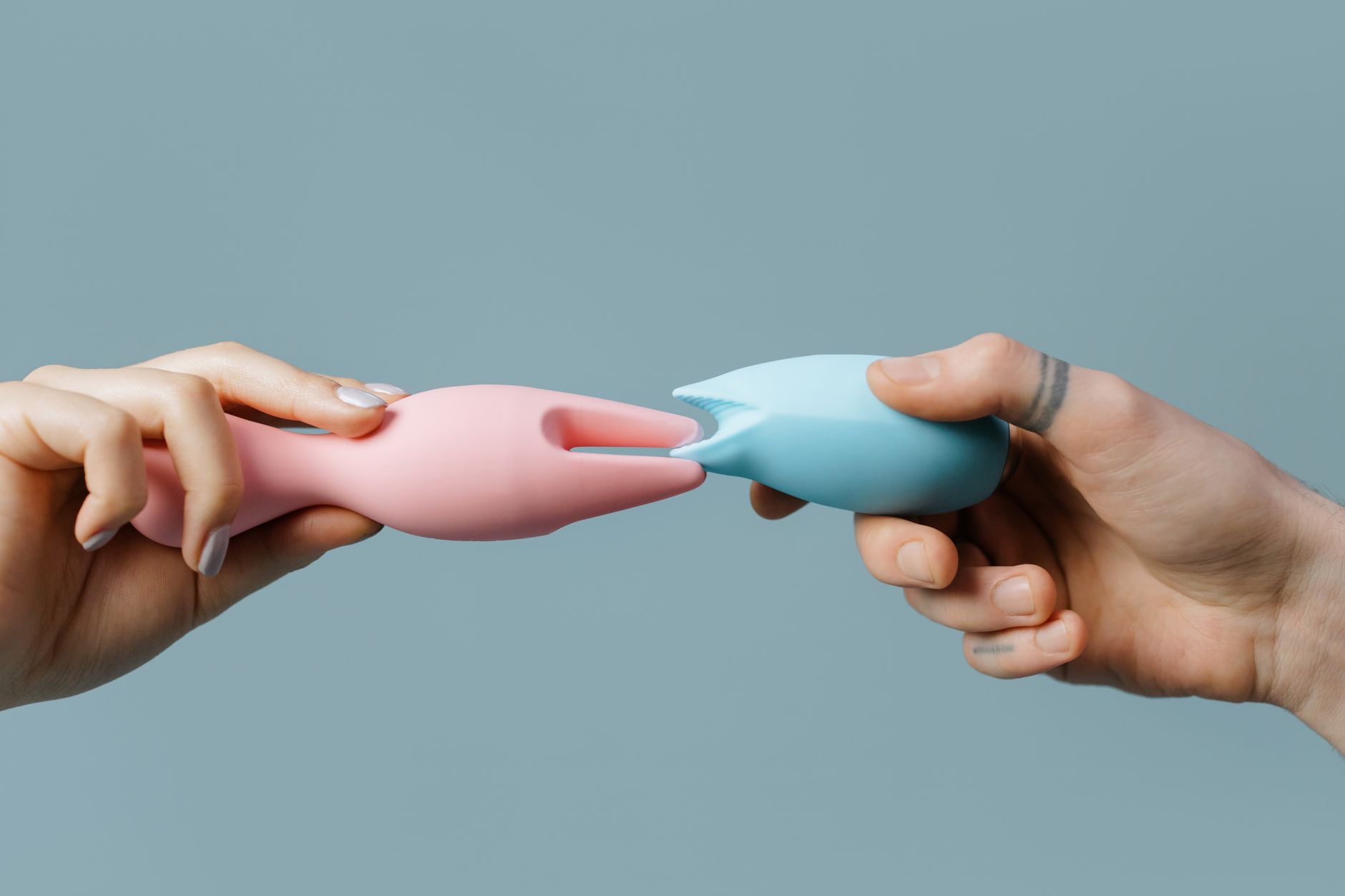
Photo by cottonbro studio on Pexels
What actually happens when you introduce a lemon clitoral vibrator
You use it. It feels good. Your body responds. Their body is usually right there watching, which changes the dynamic completely. Most partners find it hot. And I mean that clinically, not colloquially. They're seeing you experience strong sensation. They're in control of something that's happening to your body. There's intimacy in that.
A lemon vibrator or any quality clitoral vibrator isn't a replacement for them. It's a tool that does one very specific thing really well. The clitoral suction on a device like the Lem stimulates in a way that fingers or a penis simply can't replicate. That's not an insult to your partner. It's geometry. A mouth can approximate suction. Fingers can approximate pressure. But sustained, rhythmic, high-frequency stimulation in exactly one spot? That's what a vibrator does.
Introduce it as that. "I want to try this because I've read that this specific type of stimulation helps me get there faster." Faster is the operative word. You're optimizing for pleasure, not fixing a failure.
Managing the emotional stuff that's actually underneath
Here's where my couples work really lives: you're not really worried about the vibrator. You're worried about what it means. Does it mean you're not satisfied with them? Does it mean you're comparing them to something or someone else? Does it mean the relationship is dying?
None of those things are true. But your partner might be thinking them too. So here's what actually helps: you say the thing you mean, not the thing you're scared to say.
Instead of: "I want to try a vibrator."
Try: "I want to use a vibrator with you because I think it'll make me come, and I want you to be part of that."
That's the difference between a logistics problem and an intimacy problem. One is solvable with a device. The other is solvable with words.
The first time you actually use it together
Expect it to feel weird. Not bad. Weird. You're introducing a new element, and your nervous system needs a moment to adjust. Give yourself permission to laugh. Seriously. Most couples laugh the first time. Someone always says something about it looking like a lemon (if you're using the Lem) or makes a joke about fruit or robots. That's healthy. That's the nervous system recalibrating.
Start with a lower intensity setting. If you're using the Lem, that might mean patterns 1 or 2 instead of going straight to 5. Your body will tell you what it wants. Pay attention to that signal, not to what you think should happen.
If orgasm happens, wonderful. If it doesn't, that's also fine. You're gathering data. You're learning what your body likes in the presence of your partner. That's the win, not the orgasm.
When it doesn't go the way you hoped
Sometimes your partner seems uncomfortable, dismissive, or refuses outright. That's information, and it's worth taking seriously. But before you catastrophize, check the facts. Is it that they don't want toys at all, or are they worried they're not enough, or are they uncomfortable with the idea of you orgasming more easily, or are they just not in the mood for something new right now?
Those are four very different problems with four very different solutions.
If it's "toys aren't my thing," you have a genuine incompatibility to discuss. That's worth working through, maybe with a couples therapist who specializes in sexual health. If it's "I'm worried you don't need me," that's the emotional conversation I mentioned before. If it's just timing or mood, give it time and try again.
But here's what I want you to know: you're allowed to have pleasure. You're allowed to want stimulation that your partner can't provide. You're allowed to use tools to get there. That's not a referendum on your relationship. That's just how bodies work.
How to bring it up if they're resistant
Don't sell them on the vibrator. Sell them on your pleasure. "I know this feels new, but I think I can experience something with this that I haven't yet. I want to try it with you because I want you to be part of discovering that." That's not a defense. That's an invitation.
If they stay resistant, ask why. Really listen. Sometimes it's insecurity (fixable with reassurance and time). Sometimes it's a boundary they have about penetration or toys that's separate from you. Sometimes it's religious or cultural conditioning they haven't fully worked through. Whatever it is, you can't solve it by pretending it isn't there.
What you can do is decide whether this is a dealbreaker for you. If orgasm through clitoral stimulation is important to you (and let's be real, for a lot of people it's the only way they can come), then you deserve access to that. That might mean using the vibrator alone. That might mean finding a partner more aligned with you. That's not dramatic. That's just basic sexual compatibility.
After the first time
The conversation shifts. Instead of "Can we try this?" it becomes "What did you think?" Listen without defending. Maybe they loved it. Maybe they felt awkward. Maybe they want to tweak the timing or the intensity or the position. All of that is workable data.
Keep the vibrator visible, not hidden. That normalizes it. It's not contraband. It's a tool you use together. And yes, you can also use it alone. Those aren't mutually exclusive things.
Consider a lemon clitoral vibrator or the Lem vibrator if you're looking for a device specifically designed for suction-based clitoral stimulation. The design makes it feel less clinical, which some couples find easier to integrate into partnered play.
The vibrator isn't a failure of your relationship. It's a tool for understanding your own body, which ultimately makes sex with a partner better.
The long game
Introducing a clitoral vibrator into your partnered sex life isn't the end of anything. It's often the beginning of better communication, which is the foundation of everything else. You learned how to ask for something vulnerable. Your partner learned how to listen without taking it personally. You both learned what each of you wants and that it's actually compatible, just with different pieces than you thought.
That's not a sign of dysfunction. That's a sign of maturity. That's what couples who last actually do.
FAQ
Should I tell my partner before or surprise them with a vibrator during sex?
Tell them first. Always. A surprise vibrator during sex isn't romantic. It's a script change without consent. Have the conversation beforehand so they know what's coming and can mentally prepare. That makes the actual experience so much better for both of you.
What if my partner thinks the vibrator means I'm not attracted to them anymore?
That's the emotional layer I mentioned. You need to name it directly: "I want to use this with you, not instead of you. It's not about you not being enough. It's about me understanding my own body better." Say it clearly. Say it more than once. And if they're still struggling with it after honest conversation, couples therapy focused on sexual health can help reframe the fear.
Is it okay to use a lemon vibrator even if my partner doesn't want to participate?
Yes. Full stop. You have the right to your own pleasure, whether your partner is involved or not. That said, if there's a bigger incompatibility here about sexuality or toys in general, that's worth exploring as a couple. But needing solo pleasure time is not a betrayal.
How do I know if my partner actually likes the vibrator or is just going along with it?
Watch for genuine engagement versus politeness. Genuine interest shows up as curiosity ("Can I try holding it?" or "What does that feel like?"). Politeness shows up as tolerance and minimal engagement. If it's the latter, check in: "How are you actually feeling about this?" They might need more time. They might have a boundary you don't know about. They might need reassurance. But don't assume they love it just because they're not saying no.
What if I want to use a lemon vibrator with my partner but they have zero interest in toys?
You're allowed to want that, and they're allowed to not want it. The question becomes: is this a dealbreaker? Can you use it alone and have it not affect your partnered sex? Or do you want the shared experience? There's no right answer, but there is a true answer for you. Sit with that honestly.
Can using a vibrator together actually improve our sex life, or is it just a band-aid?
It can genuinely improve things. Not because the vibrator is magic, but because using it together requires communication, vulnerability, and willingness to try something new. Those things strengthen a relationship. That said, if there are deeper sexual or relational problems, the vibrator won't fix those. It'll just make them more visible. Which is actually useful information.