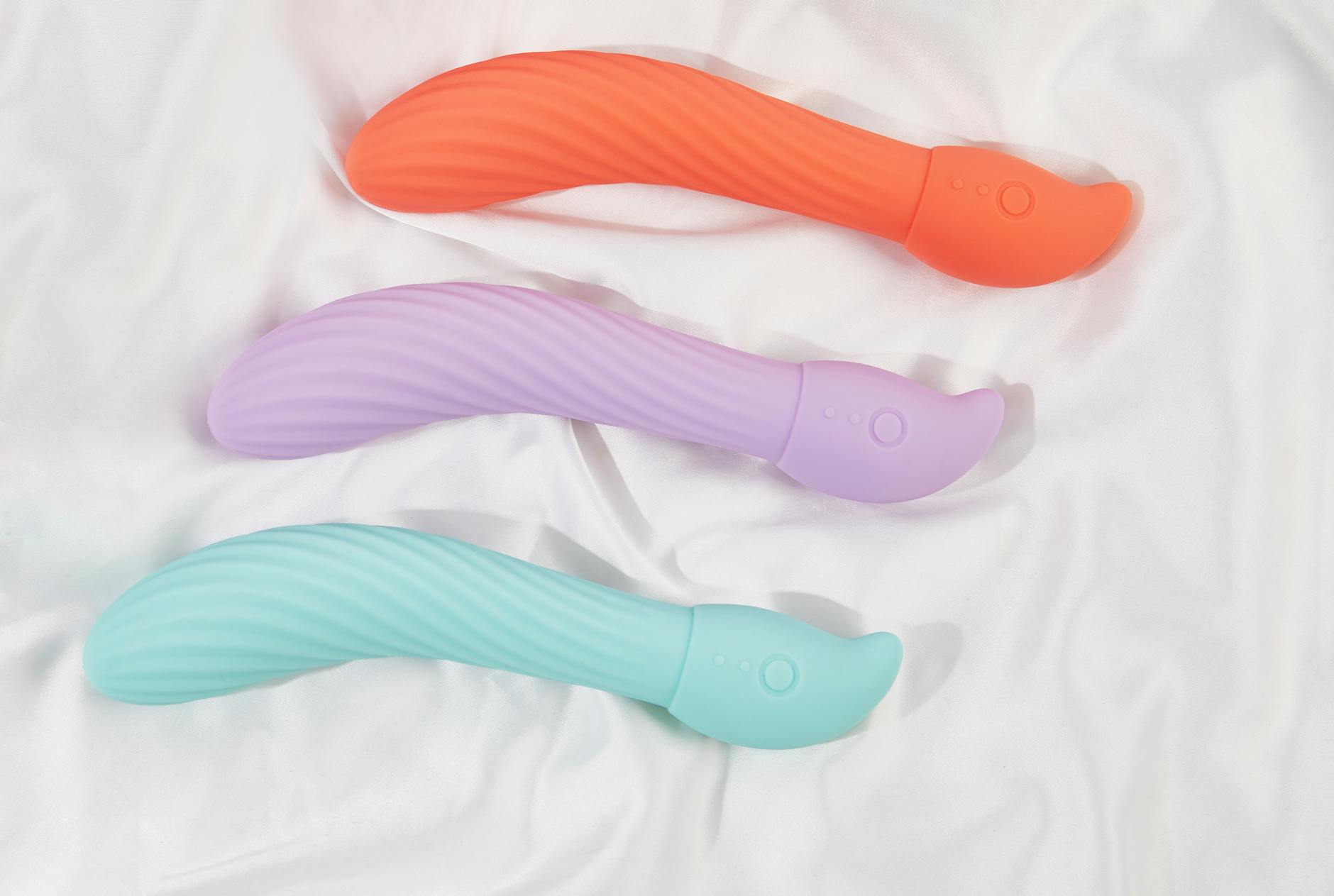
Let's talk about the conversation you're dreading
Honestly, most couples don't introduce new toys into their sex life because of the 47 conversations they imagine having first. The awkwardness, the potential misunderstanding, the risk that your partner hears it wrong and thinks you're bored with them. So the lemon clitoral vibrator stays in the browser tab, and you stay stuck in whatever rhythm you've settled into.
Here's what I've seen in 20 years of couples counseling: the conversation is never as bad as you think it will be. But the way you frame it matters enormously.
Why this conversation happens at all
Let's start with the honest part. You want to introduce a lemon vibrator for one of three reasons, or some combination of them: because you think it would feel amazing, because you want to share something new with your partner, or because something isn't working in the sexual part of your relationship and you're hoping a toy might help.
None of these reasons are bad. But they're different conversations, and your partner needs to know which one you're having. "I want to try a lemon vibrator because I think it would feel incredible" is not the same conversation as "I'm not satisfied and I think a toy might fix it." Your partner will hear those completely differently, and one of them might trigger defensiveness or shame.
The trick is isolating what you actually want from this conversation before you open your mouth.
Before you say anything: three things to get clear on
What problem are you actually trying to solve? Not in your head. On paper. Write it down. "I want more intense orgasms," or "I want us to feel playful together again," or "I'm curious what this would feel like." Be specific. Vague conversation starters lead to vague, unsatisfying discussions.
Are you asking for permission or collaboration? Big difference. "I want to try a lemon vibrator" (permission) is different from "I think we should explore lemon vibrators together" (collaboration). Both are valid. You need to know which one you're asking for before you speak. If you ask for permission and your partner hears a request for collaboration, you'll both feel misunderstood.
What does success look like? Is it that your partner agrees to try it immediately? That they're open to it eventually? That they understand why you want it, even if they're not ready? Be realistic. If your partner is traditionally reserved, "success" might be a conversation, not immediate enthusiasm.
The timing and location matter more than you think
Don't bring this up during sex. Don't bring this up during an argument. Don't bring this up when your partner is tired, stressed, or distracted. You know what good timing looks like: a calm evening, both of you relaxed, phones down, time to actually talk without rushing.
Privacy matters too. Not because this is shameful (it isn't), but because your partner needs to feel safe to ask questions and say what they actually think without worrying about being overheard.
How to actually start the sentence
Here are three openings that work because they're honest and they give your partner a context clue about where this is going:
"I've been thinking about something, and I want to run it by you." This signals that it's not an emergency, it's not criticism, and you want their input. It's collaborative.
"I read something that made me curious, and I want to see what you think." This frames it as exploration, not demand. It softens the ground.
"There's something I want to try that I think could feel really good for both of us." This leads with benefit and assumes collaboration.
Avoid: "I need you to listen to something," "I have to talk to you about our sex life," or anything that sounds like bad news. Your partner will brace for criticism, and you've already lost.
The actual words: three conversation templates
If you want to introduce a lemon vibrator for your own pleasure
"I've been curious about trying a lemon clitoral vibrator. I think it would feel amazing, and I'd love your thoughts. Are you open to me exploring that?"
If they ask why, tell the truth. "I want to experience something different," or "I think the sensation would feel incredible," or "I've been reading about how they work and I'm just interested." You don't owe your partner an explanation that frames this as a problem you're solving in your relationship. You're an adult with your own body and curiosity.
If you want to try a lemon vibrator together
"I think we could have a lot of fun exploring lemon vibrators together. I've been thinking about how we could use one during sex, and I'm excited about it. What do you think?"
This is explicitly collaborative. You're inviting them into something, not asking permission for something separate. It's warmer, and it gives them a role in the discovery.
If you think a lemon vibrator might help with something that's not working
This one needs more setup. "I love you, and I want us to feel connected sexually. I've noticed that [thing you've noticed], and I think a lemon vibrator might help. I'm not saying anything is wrong. I just think this could make things feel better for both of us."
The setup matters because your partner's brain will go to "they're not satisfied with me" before it goes to "oh, that sounds fun." You need to cut that off. This is about enhancement, not substitution. You still want them. You just want more.
What happens if they say no (or hesitate)
First, don't panic. Hesitation is not rejection. Most partners hesitate before they get curious. They need time to sit with the idea.
If your partner says no outright, your response is key: "Okay. I get it. Can I ask what your hesitation is?" And then actually listen. Don't defend. Don't explain why they're wrong. Just listen.
Most "no" responses are actually "I'm nervous because." Maybe they think toys mean you're not attracted to them anymore. Maybe they've never talked about sex explicitly and it feels risky. Maybe they feel inadequate. None of those things are true, but your partner might believe them. Your job is to understand the actual worry underneath the no.
Then you can address it. "A lemon vibrator doesn't mean I want you less. It means I want more sensation, and it has nothing to do with how attracted I am to you." Or: "I get that this feels risky. We can go slow. We can just talk about it first. No pressure."
Give your partner time. If they said no, revisit it in a few months. Sometimes people need time to get used to an idea before they feel curious about it.
If they say yes (or are curious)
Don't skip straight to the bedroom. Have a planning conversation first. "If we do this, what would feel good to you? What are you curious about? What would make you feel comfortable?"
This is where you can explore what a lemon suction toy actually feels like and how to use one together. Talk about when you'd try it, where, what the experience might look like. Let your partner ask questions. Answer them honestly.
Then, when you actually use it, start slow. Don't try everything at once. Try a single position with the toy, see how it feels, and check in afterward. "Did that feel good? Do you want to try it again? Any adjustments?" Treat it like an experiment, not a performance.
The hardest part: what comes after
Honestly, the conversation is rarely the hard part. The hard part is what happens after your partner's curiosity turns into resistance, or what happens if the lemon vibrator feels amazing to you but your partner feels weird about it.
That's when you need a different conversation. "I notice you seem off about the vibrator. I want to understand what's going on." And again, listen without defending.
Sometimes this is about insecurity. Sometimes it's about surprise. Sometimes your partner is fine with it but uncomfortable with the amount of pleasure you're getting, which is its own issue worth unpacking. You can work through any of this, but you have to name it first.
Why this actually strengthens your relationship
Couples who can talk about sex are couples who can talk about anything. They've practiced asking for what they want, listening without defensiveness, and collaborating on something vulnerable. That skill set transfers everywhere.
Introducing a lemon clitoral vibrator isn't about the toy. It's about creating a relationship where you can say "I want to try something," and your partner takes it seriously instead of as criticism. That kind of safety is worth far more than any single sexual experience.
People also ask
What if my partner feels threatened by a lemon vibrator?
That's coming from somewhere real, even if it doesn't make logical sense. Don't minimize it. Instead, acknowledge it: "I hear that you feel worried. That makes sense because [reason]. But here's what's actually true." Then explain. A toy is not a replacement. It's an addition. It doesn't mean you want them less. It means you want more sensation, period. If your partner is still struggling, couples counseling is worth it. This is fixable, but it usually needs a neutral third party.
Should I surprise my partner with a lemon vibrator, or should I talk about it first?
Talk about it first. Always. Surprising someone with a toy risks them feeling ambushed or like you've made an assumption about their body without consent. The conversation might feel awkward, but it's way less awkward than your partner feeling blindsided. The anticipation of talking about it and planning it together is actually sexy.
What if we get the vibrator and my partner doesn't want to use it?
That's okay. Keep it. Maybe they'll be curious later. Maybe they won't. But the conversation itself has value because you've now created a door to talk about sex in a real way. That's worth something even if the lemon clitoral vibrator never gets used.
How do I introduce a lemon vibrator if we've never talked about toys before?
Start smaller. Don't lead with "I want to introduce sex toys." Lead with "I want to talk about what we both like in bed." Get a baseline conversation going. Then, once you know what you each want, the lemon vibrator becomes part of a bigger conversation about exploring together, not a shocking left turn.
What if my partner brings up lemon vibrators first?
Then you get to listen and ask questions. "That's interesting. Tell me more about what you're thinking." Don't assume you know what they want. Let them explain. Then you get to decide if you're curious too.
Can we use a lemon vibrator if we've been having sex for 20 years?
Yes. Absolutely. Long-term partners sometimes need new experiences to feel playful together again. That's not weird. That's smart. A lemon vibrator can be exactly the novelty that reminds you both why you like each other.
The summary: you've got this
The conversation you're avoiding is uncomfortable for about five minutes. Then it's either a yes, a maybe, or a no. Any of those outcomes gives you information you need. You'll know where your partner stands. You'll know what's safe to explore. You'll have created an opening to talk about your body and your desires in a real way.
That's worth the awkwardness. Your pleasure matters. Your partner's comfort matters. And the space between them is where good relationships actually happen.
Ready to have the conversation? Start with what you actually want, pick a quiet moment, and use one of the openings above. Then listen to what your partner says back. You might be surprised by how open they are.