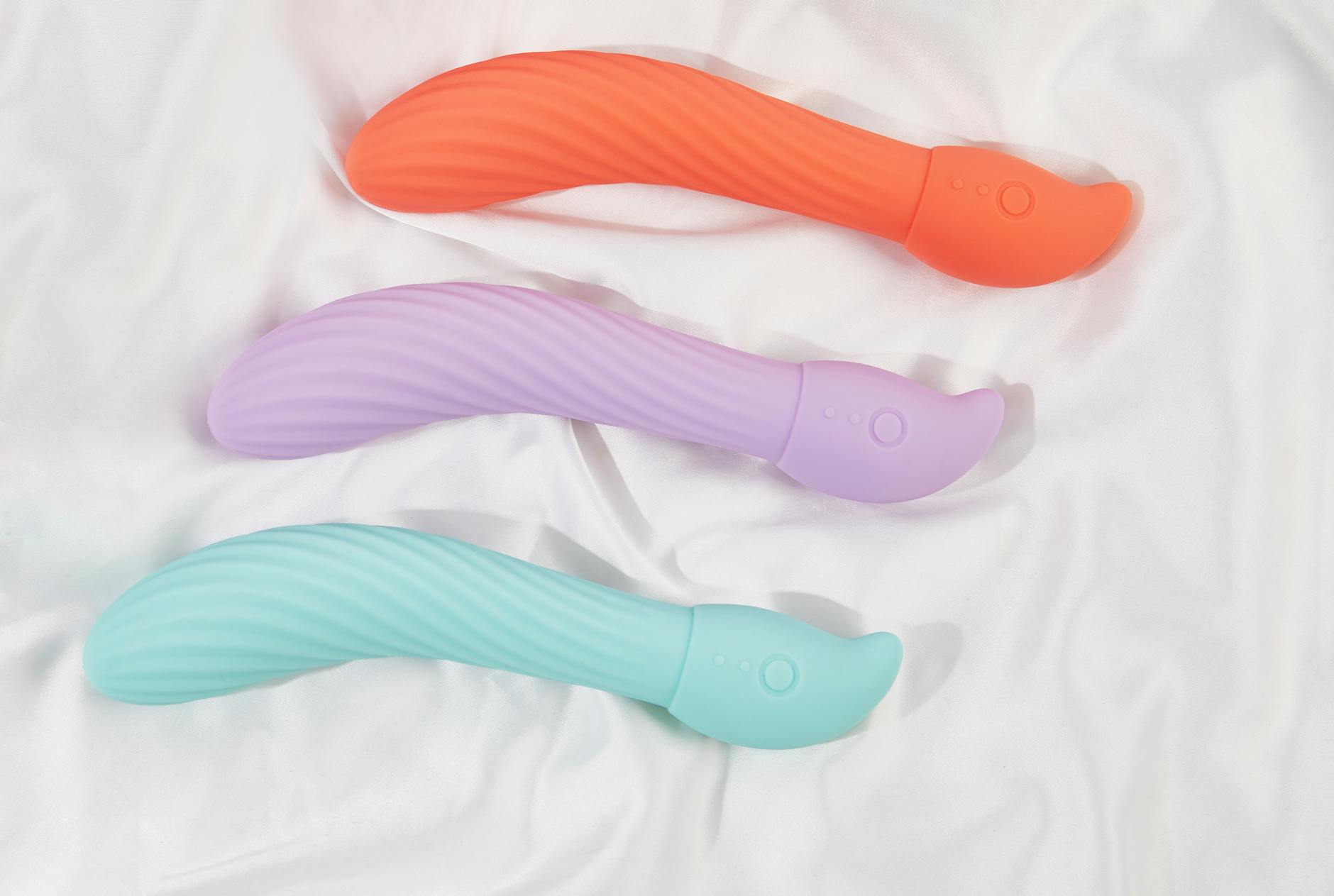
Here's what nobody tells you about menopause and pleasure
Menopause changes how your clitoris responds to touch. It does not end your capacity for orgasm. That's the distinction most women never hear, and it's the one that determines whether the next chapter feels like loss or discovery.
Estrogen drops. Tissue thins. Blood flow slows slightly. Your clitoris is still there, still responsive, still capable of extraordinary sensation. But the route to that sensation shifts. What worked at 35 might feel too intense at 55. What felt nice before might feel perfect now.
What actually happens to clitoral sensitivity after menopause
Your clitoris doesn't shrink or numb. What changes is the tissue around it. Thinner vaginal tissue means the clitoris is less buffered by surrounding tissue, which can make direct vibration feel rawer. Simultaneously, the clitoral glans itself loses some of the plump fullness that estrogen provides, which means stimulation needs to be slightly smarter, not harder.
I see this all the time with clients who've been using the same device for decades and suddenly find it feels abrasive. They panic. I tell them: your body didn't break. Your preferences got smarter.
Clitoral suction toys like the Lem work brilliantly for post-menopausal bodies because they stimulate nerves without the same mechanical friction. Instead of vibration hammering the tissue, suction creates a gentle seal and rhythmic pressure. It's a completely different sensation engine. Many of my clients report their first orgasm after menopause came through suction, not vibration.
Why suction beats vibration for post-menopausal clitoral pleasure
Three mechanical reasons.
First: reduced friction sensitivity. Vibration relies on rapid back-and-forth movement. Post-menopause, that movement can feel exhausting on thinner tissue. Suction creates static pressure with rhythmic intensity changes. No friction, all stimulation.
Second: nerve pathway difference. Your clitoris has roughly 8,000 nerve endings, but they cluster differently than the surrounding tissue. Vibration activates surface nerves broadly. Suction creates a pressure gradient that activates deeper nerve bundles. For many post-menopausal bodies, deeper activation feels more satisfying.
Third: arousal efficiency. Post-menopause, arousal takes longer to build. You need 15 to 25 minutes of warm-up instead of five. Suction's gentler engagement works better for that extended timeline. You're not racing to peak; you're building gradually.
I often recommend starting with a lemon-shaped clitoral vibrator if you've never used suction before. The rounded design fits naturally against your vulva, and the compact size means precision without guesswork.
The lubrication question after menopause
Here's the thing: you don't need lube for suction to work, but you might want it anyway.
Genitourinary syndrome of menopause (GSM) is real. Tissue thins, natural lubrication drops, and that can make any stimulation feel uncomfortable if you're not prepared. Water-based lubricant helps in two ways. It creates a glide surface between the toy and your skin, and it reminds your body that this is play, not friction to endure.
Use a generous amount. More than feels necessary. Apply it to the toy, apply it to your vulva, reapply mid-session. This isn't a sign of malfunction. It's maintenance.
If natural lubrication has dropped significantly, talk to your doctor about topical vaginal estrogen. It's genuinely transformative and takes effect within weeks. You're not choosing between "suffer through" or "give up." There's a third option.
Warm-up time is your actual secret weapon
Most people assume that post-menopausal pleasure requires better toys. Sometimes it requires better pacing.
Arrangement time matters. Pressure matters. Curiosity matters. If you jump straight to maximum intensity, you're fighting your body's natural arousal curve. If you spend 10 to 20 minutes exploring your own responses before any toy touches you, everything after works better.
I recommend this ritual: lie down, hand on your own vulva, no goal beyond noticing sensation. What feels warm? Where do you want more attention? What does playful feel like when there's no performance involved? Then bring the toy in. You're not starting from zero; you're amplifying something already building.
Post-menopausal bodies often respond best to what I call "intelligent slowness." Not rushed, not marathon. Intentional. This shift can feel frustrating at first because it's different from what worked before. But most women tell me later that this version feels more intimate, more connected, more theirs.
Partner communication during this transition
If you have a partner, separate conversations matter.
"My body is responding differently" is not the same as "I'm not interested." "I need more time to warm up" is not the same as "something is wrong with us." Conflating these two things turns both conversations dead.
Many partners assume slowing down means loss of desire. It doesn't. It means your body is teaching you something about how pleasure actually works when you're not riding hormonal waves.
Tell your partner: I want to explore this differently. Here's what feels good now. Help me figure this out. The clients I work with who have this conversation early report that post-menopausal sex becomes richer, not diminished.
Rebuilding confidence with the right tool
A lot of sexual confidence after menopause comes down to having a tool that matches your body's current needs, not last decade's needs.
If you've been using traditional vibrators and they feel wrong now, that's data. Your clitoris isn't broken. The stimulation pattern just doesn't fit anymore. Lemon-shaped suction toys like those offered by Hello Nancy are designed specifically for this shift. Rounded, gentle, precise.
I also recommend experimenting with intensity levels. Start at patterns 1 and 2. Seriously. Your tissue is more sensitive in some ways and less responsive in others. Lower intensity often produces better sensation.
FAQ: Lemon vibrators and post-menopausal pleasure
Why do lemon vibrators work better than traditional vibrators after menopause?
Lemon-shaped toys typically use suction rather than vibration, which eliminates friction on thinned tissue. Instead of mechanical vibration, suction creates rhythmic pressure that activates different nerve pathways. For post-menopausal bodies, this often produces deeper, more satisfying sensation without the raw feeling that traditional vibrators can create.
Is it normal for my clitoris to feel less responsive after menopause?
Yes. Tissue thins, blood flow changes slightly, and the tissue surrounding your clitoris is less plump. But less responsive to one type of stimulation doesn't mean less responsive overall. Many women find their clitoris responds beautifully to suction, to slower warm-up, to different touch patterns. Responsiveness didn't disappear; it evolved.
How much lubricant should I use with a lemon clitoral vibrator?
More than feels necessary initially. Water-based lube should coat both the toy and your vulva generously. Reapply mid-session. This isn't a sign of dysfunction. It's creating optimal conditions for sensation. If you're experiencing significant dryness, talk to your doctor about topical vaginal estrogen, which takes effect within weeks.
Can I still have intense orgasms after menopause?
Absolutely. Many women report their most intense orgasms come after menopause, partly because there's less cognitive noise and more permission for purely selfish pleasure. Intensity doesn't vanish; it sometimes gets recalibrated through different stimulation patterns. Suction-based toys help access that intensity for many post-menopausal bodies.
Should I tell my partner that I want to use a lemon vibrator?
Yes, if there is a partner involved. But frame it as exploration, not correction. "I want to try something different because my body is teaching me new things" lands differently than "the old approach doesn't work anymore." Most partners appreciate being included in discovery, not positioned as the problem.
How long should warm-up take after menopause?
Budget 15 to 25 minutes. Arousal takes longer to build. This isn't a flaw; it's actually an opportunity to slow down and pay attention. Use this time to explore your own responses, apply lube, build anticipation. When you bring a toy in, you're amplifying something already in motion, not starting from zero.
The bottom line
Menopause is not a deadline on pleasure. It's a plot twist. Your body is telling you that the old way doesn't work. Listen. Adjust. Experiment with tools designed for how you actually are now, not how you used to be.
Lemon-shaped suction toys, slower warm-up, abundant lube, and genuine curiosity about what feels good now. That's the foundation. Everything else builds from there.
If you're experiencing pain, talk to your doctor. If you're experiencing desire loss that won't shift, bring it up. If you're just discovering that your pleasure landscape changed, welcome to the club. You're exactly where you're supposed to be.
Ready to explore? Start the conversation with yourself first. What actually feels good when you're alone and there's zero pressure? That answer matters more than any toy recommendation.