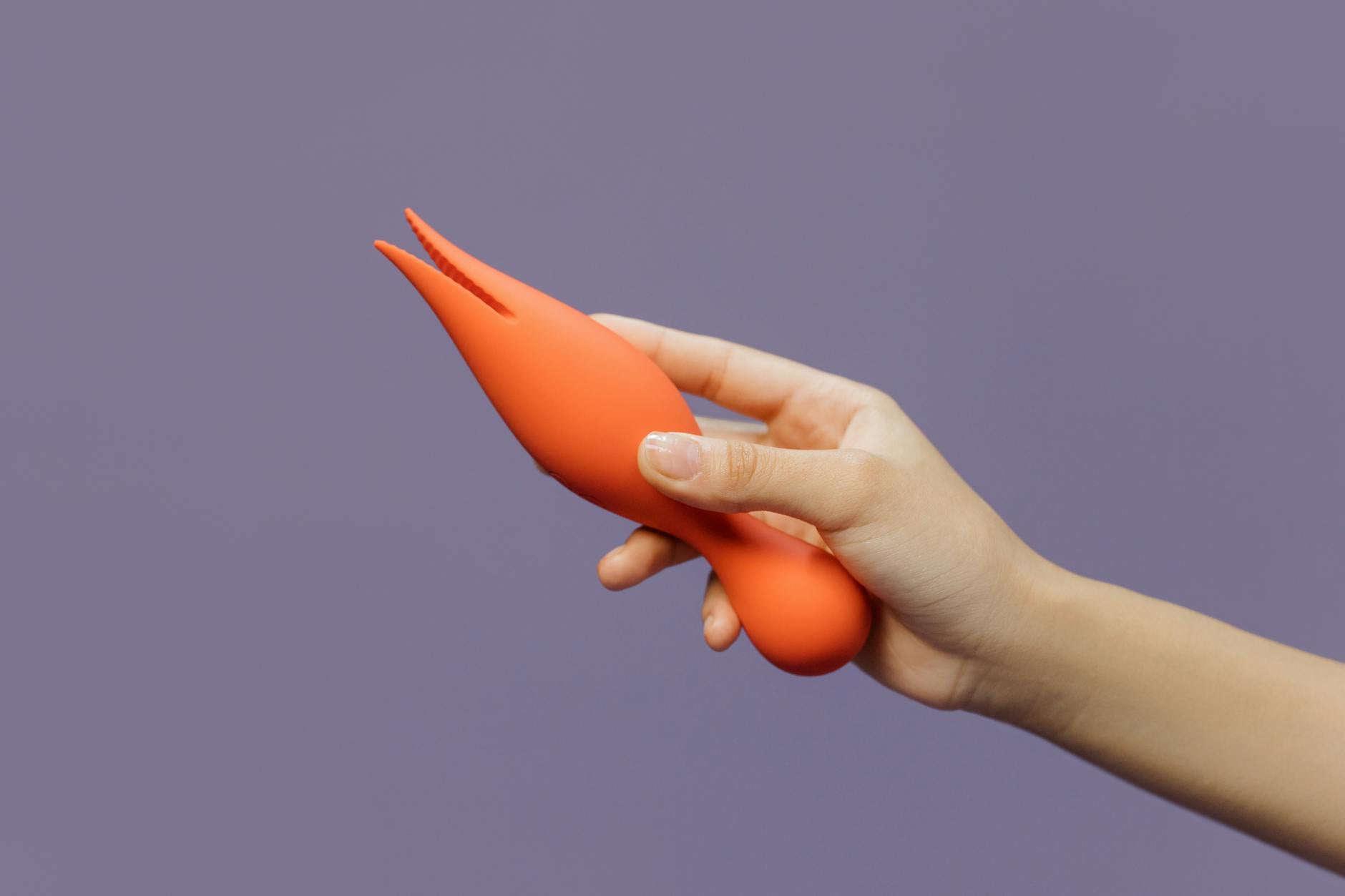
Your cycle is not one sexual experience, it's four
Let's be real: your body does not feel the same on day 7 as it does on day 21. Estrogen and testosterone spike and dip on a schedule. Your clitoris swells or recedes slightly. Your pelvic floor tightens and relaxes. Your skin becomes more or less sensitive. And somehow, the wellness industry has spent decades pretending that "female sexuality" is a fixed thing that stays the same all month.
It's not. And once you stop treating it like it is, pleasure gets easier.
When you're working with a lemon vibrator, these hormonal shifts matter even more. Suction-based stimulation like the Lem responds directly to tissue engorgement and blood flow. When those change, the whole experience shifts. The good news: understanding your cycle means you can actually optimize your pleasure instead of just hoping it feels good.
The four phases and what they mean for sensation
Menstruation (days 1-5). Estrogen and progesterone are both low. Your clitoris is less engorged. The pelvic floor might feel achy or tender. Penetration often feels less pleasurable right now, but external clitoral stimulation can feel really satisfying. Many people find that lighter suction settings (patterns 1-2 on the Lem) and a shorter session feel best. The bonus: orgasms during your period can actually ease cramping because they release oxytocin and reduce tension in the uterus.
Follicular phase (days 6-13). Estrogen rises. Blood flow increases. Your clitoris plumps up. Arousal builds faster. This is when many people report the easiest time reaching orgasm. Higher intensity settings feel good without being overwhelming. Longer sessions (15-25 minutes) are easier because your body is more responsive. If you've been struggling with sensation or have thick clitoral tissue, the follicular phase is often when a lemon vibrator shines brightest.
Ovulation (days 14-15). Testosterone spikes alongside estrogen. This is peak sensitivity, peak arousal, peak desire. Some people find that even the highest settings feel gentle. This is the phase when solo play can feel almost effortless. It's also the phase when your sensitivity to emotional closeness peaks if you're with a partner. The intensity of pleasure isn't necessarily higher, but the emotional resonance often is.
Luteal phase (days 16-28). Progesterone rises as estrogen dips. Your clitoris becomes less engorged. Arousal takes longer to build. You might need a longer warm-up, more lube, or lower intensity settings. Some people find that higher settings feel uncomfortable right now because the tissue is less cushioned. This is not a "bad" phase for pleasure. It's just a different one. Patience and starting gentle often feels better than jumping straight to full intensity.
How to actually use the Lem through your cycle
Menstruation. Start at pattern 1 or 2. Go slow. You don't need to build to an intense finish. In fact, a series of smaller, gentler orgasms often feels better than chasing one big one. The goal is sensation and release, not performance.
Follicular phase. This is when you can confidently explore patterns 3-6. Your body has more buffer tissue. Direct stimulation feels better. Longer sessions feel sustainable. If you've ever wanted to try something new with the Lem, this is the window.
Ovulation. Trust what your body tells you. If pattern 1 feels intense, stay there. If you want to explore the full range, go for it. The key difference during ovulation is that arousal and pleasure happen faster, so you might not need the long ramp-up that other phases require.
Luteal phase. Return to the conservative approach: start with pattern 1 or 2. Add extra water-based lube. Budget more time. Think of this phase as similar to what you'd do during menstruation, but usually with more room to build intensity if you want to. Pay attention to what your body actually wants instead of what it wanted last week.
What actually changes in your tissue
The clitoris is not a fixed structure. It's a highly vascular organ that swells with blood and recedes. During the follicular and ovulation phases, increased estrogen means increased blood flow. Your clitoris thickens slightly, the tissue becomes more cushioned, and suction works with less pressure because there's more engorgement naturally happening.
During menstruation and the luteal phase, less estrogen means less baseline engorgement. The tissue is thinner, more sensitive. A lemon vibrator's gentle suction approach is actually ideal for this because it creates engorgement gradually instead of hammering away with vibration.
This is also why some people find that thick vibrators feel uncomfortable during certain phases but not others. It's not about pain tolerance changing. It's about the tissue literally reshaping itself.
Tracking what actually feels good (without obsessing)
You don't need an app or a spreadsheet. But you do need five minutes of honesty after you use the Lem.
After each session, ask yourself: Did I need lube? How many minutes before I felt properly aroused? Which pattern felt best? How intense did I want to go? Did my body feel like it wanted more or was satisfied?
Keep these observations in your head or in a note. After two cycles, patterns emerge. You'll notice that week three is always "needs more warm-up" or "loves patterns 5-6." That's the intel that transforms pleasure from hit-or-miss to actually reliable.
When your cycle goes wrong
If you notice that one phase suddenly feels painful, or if sensation drops completely in a phase where it used to feel great, something has changed. That might be stress, a new medication, a relationship shift, or actual physiological change.
Don't just power through it. That's not brave, that's boring. Reach out to a gynecologist if pain shows up, or talk to your partner (if you have one) if emotional stuff seems to be tangled up in the physical sensation. A lemon clitoral vibrator is a tool, and like any tool, it works best when the foundation is sound.
Why this matters for long-term pleasure
So many people grow up thinking that sexuality is supposed to be constant and spontaneous. One temperature, one desire level, one set of preferences all month long. Then your body does its actual job, which is to shift. And suddenly you think something is wrong with you.
It's not. Your body is just more sophisticated than a light switch.
Once you accept that your pleasure changes throughout your cycle, two things happen. First, you stop blaming yourself for wanting something different on day 25 than you wanted on day 10. Second, you actually get to have more pleasure because you're working with your body instead of against it.
A lemon vibrator, with its range of suction patterns and its gentleness, actually makes this whole thing easier. You don't need to buy a different toy for each phase. You just need to know which button to press.
Your cycle is a feature, not a bug. And your pleasure should reflect that.
FAQ: Cycle and lemon vibrators
Can I use a lemon vibrator while I'm menstruating? Absolutely. Actually, many people find it's one of the best times to use one because the sensations can be really satisfying without needing intense stimulation. Start with lower patterns and see what your body wants.
Does my clitoris actually change size during my cycle? Yes. The clitoris contains erectile tissue that responds to hormonal fluctuations and blood flow, just like the penis does. During high-estrogen phases, it becomes more engorged. During low-estrogen phases, it's less full. It's usually subtle, but if you pay attention to sensation, you'll notice the difference.
What if I want the same pleasure intensity all month? That's a reasonable goal, and you can get there partly by adjusting your technique. But understand that you might need more warm-up time, different patterns, or more lube in some phases. Also, the clitoris can tolerate more intense stimulation when it's well-engorged. If the intensity feels uncomfortable in certain weeks, it's usually because the tissue is less cushioned, not because something is wrong.
Should I track my cycle to optimize pleasure? You don't need to be obsessive about it. But noticing the rough patterns (when arousal is easy, when it takes longer, when sensation feels different) is genuinely useful. Two months of observation is usually enough to figure out your personal rhythm.
Can hormone birth control affect how a lemon vibrator feels? Yes. Hormonal birth control dampens the natural rise and fall of estrogen and testosterone. Some people find their cycle phases are less pronounced, so pleasure feels more consistent. Others find that their baseline arousal or sensation shifts. If you're on hormonal birth control and pleasure has changed, that's worth noting, but it doesn't mean the Lem won't work for you. It just means your optimal technique might be different than someone not on hormones.
Is there a "best" phase of my cycle for using a lemon vibrator? No. Each phase has different strengths. Follicular and ovulation phases often feature easier arousal and tolerance for more intensity. Menstrual and luteal phases often feature more localized, satisfying sensations at lower intensities. The goal is to let each phase be what it is instead of comparing it to another.
What to do next
If you're curious about how a lemon clitoral vibrator might work with your cycle, start simple. Use it regularly (at least once a week if possible) and notice what changes. After two months, you'll have enough data to understand your own pattern.
And if cycle-related pleasure shifts are connected to other things, like your relationship, your stress, or your body image, that's real too. Pleasure is physical and emotional at the same time. If the technical adjustments aren't enough, a conversation with a therapist or sex coach can help you piece together the whole picture.
Your cycle is not an obstacle to good sex. It's information. The more you work with it instead of against it, the better everything feels.
Want to go deeper on how your body and pleasure actually connect? Check out our guide to rebuilding sensation after hormonal changes.