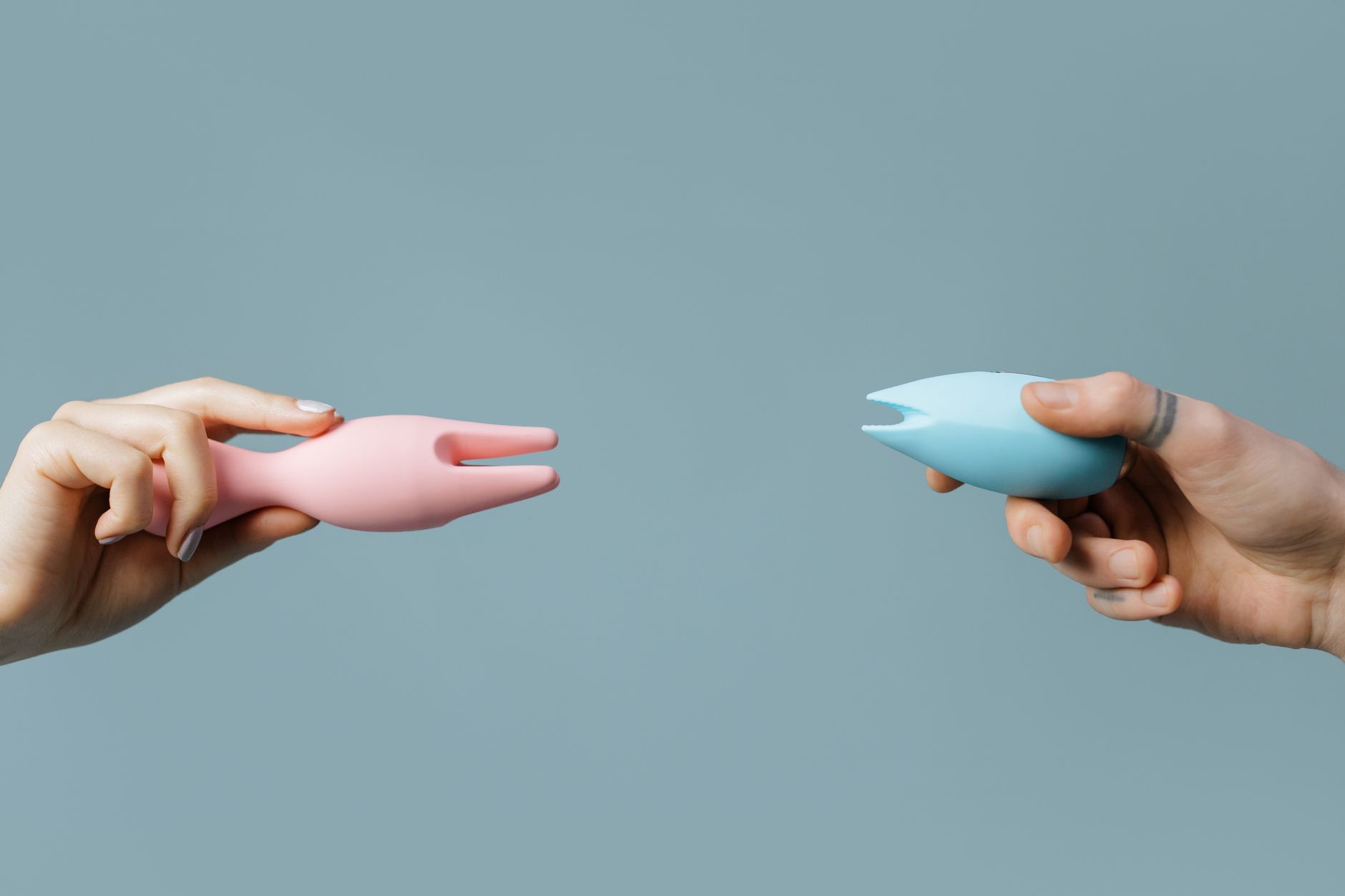
How to Use a Lemon Vibrator for Better Pleasure With a New Partner
The conversation you're nervous about doesn't have to be. Here's exactly how to introduce a lemon clitoral vibrator early in a relationship without the awkwardness.
You're three months in. Things feel good. And then you wonder: should I bring this up now, or wait? Will they think I'm weird? Will they think I'm bored with them? The silence around introducing a lemon vibrator early in a relationship creates more anxiety than the actual conversation ever will.
Here's what I've seen work with hundreds of couples: bringing pleasure tools into a new relationship from the start actually deepens trust faster than pretending they don't exist. It signals that you're comfortable with your own body, that you value mutual pleasure, and that you see the relationship as a space where both people get to be whole. That's the opposite of weird.
Let's walk through how to do this in a way that feels natural, honest, and sexy.
There's a window. Too early (first two weeks) and it can feel like pressure when you're still figuring out chemistry. Too late (after a year) and it reads like something was missing, which creates a different kind of awkwardness. Three to four months in is the sweet spot for most couples. You've moved past the initial adrenaline phase, you trust each other enough to be vulnerable, and you're not yet locked into "this is how we have sex" patterns.
If you're already past that window, don't panic. The conversation works at any point. But earlier is genuinely easier because there's less established routine to feel like you're disrupting.
Forget the conversation where you sit them down. That's theater. Instead, integrate it naturally into existing intimacy talk.
The setup: You're already talking about what you like, what feels good, what you want to explore more of. This is the door you walk through. It might sound like, "I've been thinking about trying a lemon vibrator. Have you ever used one, or do you know what they are?" Simple. Curious. No drama.
The frame: "I'm not asking because anything's missing. I genuinely just think it would feel amazing, and I'd love to try it with you." This reframes it from "something's broken" to "something exciting." There's a massive difference.
The permission: "If you're not into it, we don't have to. But I wanted you to know it's something I'm interested in." You're not demanding, but you're also not apologizing for your pleasure.
There's a reason to choose a lemon sucker over other vibrator styles when you're new to this together. The Lem's design is fundamentally different from traditional bullet vibrators. It uses gentle suction rather than just vibration, which feels more like partnered touch and less like a machine.
For new relationships, that matters psychologically. Your partner isn't watching you use something that feels clinical. They're watching you experience something that mimics what hands and mouths do. It's intimate rather than mechanical. The lemon clitoral vibrator design also means you can use it together more naturally than, say, an internal vibrator. There's room in the experience for them to be part of what's happening.
You've had the conversation. They're game. Here's what makes the first experience feel connected rather than awkward.
Start with foreplay fully happening. Don't introduce the lemon vibrator cold. You want to be already aroused, already connected, already in the moment. The vibrator joins what's already working, not replacing it.
Let them see it first. Hand it over. Let them hold it, turn it on, understand how quiet and gentle it is. Familiarity kills nervousness fast.
Show them what you like. Use it on yourself while they're watching. This does three things at once: it reassures them that you know how to use it, it's incredibly sexy for most partners to watch, and it takes the pressure off performance. You're not asking them to figure out what you want. You're showing them.
Then invite them in. "Want to try?" can be them using it on you, or it can be them incorporating it into what they're already doing with their hands or mouth. A lemon vibrator plays well with partners because it doesn't demand a specific role.
Keep talking. "That feels amazing." "A little higher." "Slower." The verbal reassurance keeps the door open. You're not just allowing feedback, you're requesting it.
Here's something I notice in relationships that last: they're the ones where both people decided early that they both deserve pleasure. Not "taking turns," not "making it work," but genuine mutual prioritization. Introducing a lemon vibrator early signals this. You're saying, "My pleasure matters enough to advocate for. And I want yours to matter too."
For some partners, this is genuinely new. They may have been in relationships where female pleasure was secondary or apologized for. Watching you unapologetically pursue your own sensations gives them permission to do the same. That's relationship infrastructure you're building, not just a sexual technique.
If your partner seems hesitant or resistant, it's rarely about the vibrator itself. It's usually about insecurity, past relationship stuff, or unfamiliar territory. That's worth a real conversation later, but not in the moment. How to talk about lemon vibrators with your partner has a deeper framework for working through that kind of resistance.
The first time is usually tentative. Everyone's a little self-conscious. By the second time, you'll know what worked, and you can lean into it. Patterns start forming fast. You'll find that they maybe prefer using it on you a certain way, or you discover that a particular setting combined with their hands hits differently.
This is when the real exploration starts. You're not proving anything anymore. You're just discovering together. That's when pleasure actually deepens.
Once you're comfortable using the lemon vibrator together during straightforward foreplay, you can expand. Some couples love it integrated during partnered sex. Some prefer it during oral sex. Some discover it works best during solo time while they're together but not penetrating. There's no "right" way.
The key is asking. "Have you thought about what you'd want to try next?" keeps the exploration collaborative. You're not springing variations on them. You're building a shared language around pleasure.
I tell couples this and they're often surprised: introducing pleasure tools early actually improves communication in other areas of the relationship. You've practiced vulnerability. You've practiced saying what you want. You've practiced listening without defensiveness. Those skills transfer everywhere.
Relationships that struggle with sex often struggle with asking for what they want in general. Conversely, relationships where both people feel comfortable advocating for their pleasure tend to also have better conversations about emotions, boundaries, and needs outside the bedroom. It's not magic. It's just that you've built the muscle.
Yes. In fact, it can be easier. There's no established pattern to feel like you're disrupting. You're literally building the sexual part of the relationship together from the ground up. The conversation might be, "I think these are really cool and I'd love to explore with you," and that's it.
That's information. Not a dealbreaker necessarily, but worth understanding. Are they uncomfortable with pleasure in general? With toys? With female pleasure specifically? A partner who's genuinely sex-positive will be curious, not defensive. If the resistance is strong, that might tell you something about compatibility worth exploring before you get deeper invested.
Yes. Absolutely. Know your own body and your device before you're trying to navigate someone else's energy too. You'll be more confident, less performative, and more able to actually feel what's happening instead of worrying about the mechanics.
Watch their body. Ask directly later if you're uncertain. "Did that feel good for you?" is a totally normal post-sex question. Their answer tells you what to do next time. And if they didn't love it, that's fine. You're still figuring out what works together.
It depends on your comfort level, but honesty usually helps. Partners respond better to "I've explored this on my own and really liked it" than finding out you've used one for years and never mentioned it. It positions solo pleasure as part of your relationship, not hidden from it.
Then you don't. Not everything has to become a regular thing. Some couples use lemon vibrators occasionally, some regularly, some never again. The goal isn't to fall in love with a specific tool. It's to know that you can explore together and communicate about what works. That's the win.
Introducing a lemon clitoral vibrator to a new relationship is really about introducing the idea that you both matter sexually. That your pleasure doesn't have to apologize. That curiosity is allowed. That you can ask for what you want and still be loved.
That's not about the vibrator. That's about building the kind of relationship where both people feel safe enough to be whole. Everything else follows from that.